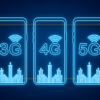
Since its introduction in 2019, 5G has spread rapidly. By the end of 2024, two billion people worldwide relied on 5G connections. Looking ahead, that number is expected to nearly quadruple to 7.7 billion by 2028.

By definition, 5G refers to the fifth generation of mobile network technology. IEEE helped standardize this technology through the IEEE 802 Series. Building on 4G, 5G is 100 times faster, more reliable, and supports millions of devices at once. For users, this means instant movie downloads, smoother augmented reality, and real‑time IoT connections for smart homes. Moreover, it benefits self‑driving cars and smart cities.

Impact of 5G Technology

Across industries, the introduction of 5G technology has had a tremendous impact.

  • Healthcare: 5G expands telemedicine, improves remote surgery, and powers wearable devices that share real-time patient data. Physicians can now diagnose and treat faster than ever.
  • Transportation: 5G enables self-driving cars to make quicker decisions, avoid accidents, and optimize traffic flow. At the same time, smart city systems benefit from real-time monitoring of traffic, electricity, and water.
  • Entertainment: 5G allows faster live streaming and more interactive experiences. Gamers can access cloud-based, high-quality games anywhere without heavy hardware.

Global Deployment

Globally, the U.S. has taken a leadership role in deploying fifth-generation networks by major wireless carriers. As a result, over 75% of American subscribers can now access 5G. Through the Bipartisan Infrastructure Deal in 2021, the federal government also pledged to invest an additional $65 billion. This amount is aimed at improving broadband and 5G service in rural communities.

In Europe, over 90% of British premises currently have access to 5G coverage,

Germany, which possesses one of the most developed 5G networks on that continent, achieved coverage of 92% by mid-2024. It continues to expand access across the country. Asia, China, and South Korea are among the countries that aggressively integrated 5G heavily into their manufacturing operations. Additionally, access to 5G continues to grow throughout the Middle East, Africa, and Latin American region.

What Challenges Are Associated with 5G Technology?

While 5G continues to deliver unprecedented benefits and expand in use, the technology has also experienced its share of challenges. Among them, the costs to build 5G networks are extensive. Regulatory differences between the U.S. and European Union have impaired their ability to fully collaborate on 5G deployment. Furthermore, the growing number of connected devices associated with the rise of 5G networks has introduced security issues and increased the risk of cyberattacks.

Despite these hurdles, however, the industry continues to move forward at a rapid pace. It perfects the current generation of technology and envisions the next one.

The upcoming emergence of “6G” connectivity promises a new paradigm in cellular technology. It runs an estimated 9,000 times faster than 5G connections. This speed enables users to, for example, download more than 20 movies per second. While experts note that 6G mobile networks remain at least five years away, the global telecommunications industry has been hard at work laying the foundations for this platform upgrade. They are entering what’s known as a “pre-standardization” phase to achieve consensus on preliminary 6G standards.

IEEE Helps You Stay One Step Ahead of 5G Developments

Designed to help technical professionals and industry leaders deliver on the 5G vision, these targeted course programs help you stay on top of the fast-paced field of 5G. They cater to the consumer demand for higher communication speeds.

5G Course Programs

5G networks have accelerated Internet of Things (IoT) innovation and connectivity around the world. What will 6G bring?

5G brought connected device, higher data transmission speeds, lower latency, and increased connectivity to a wide range of IoT devices. These developments led to advancements in various sectors such as healthcare, transportation, manufacturing, and entertainment. A few of the advancements made possible by 5G include remote surgery, real-time industrial monitoring, and immersive virtual reality experiences.

How Is 5G Evolving?

Five years later, enhancements to 5G are being rolled out. Called 5G Advanced, these planned technological and network upgrades expand on the existing capabilities of 5G. One key component of 5G Advanced is the application of artificial intelligence (AI) and machine learning (ML) solutions. These introduce more intelligent network management capabilities.

These enhancements to 5G are laying the groundwork for 6G, which is slated to be commercially available in 2030.

Differences Between 5G and 6G

According to the U.S. Department of Homeland Security, notable differentiators of 6G from 5G include enhanced scalability. Additionally, there is greater use of the radio spectrum, and dynamic access to different connection types. This means connections will be more reliable. Therefore, fewer drops in connection is critical to support advanced technologies like drones and robots. This dynamic access will enable connected devices to use multiple connections concurrently (such as Wi-Fi and cellular) to stay connected even if one source is interrupted.

The addition of AI and ML to the 6G network is intended to allow smarter devices to learn more like humans do. On a microscale, these applications can be used in autonomous vehicle technology. Potential use cases include improving traffic flow and allowing for autonomous taxi/bus services. On a macroscale, AI and ML will improve efficiencies across a wide range of areas. This includes manufacturing, logistics, and analytical industries, thanks to detecting trends and paths unseen by humans.

For local, state, and federal governments, services can be metered and controlled to match demand more precisely at any given moment. This increases efficiency, improves availability, and possibly slows the effects of global warming. Additionally, these algorithms could aid in predictive modeling for services (for example impacting wait times, trash collection, bus usage) and weather events (such as tornados, floods, fires, and more).

As 5G network capabilities expand globally, they pave the way for 6G. The world will need more engineers trained on telecommunications system deployment and management.

Leverage 5G Networks to Transform the World

IEEE is proud to launch its newest training program, 5G/6G Essential Protocols and Procedures Training and Innovation Testbed, in partnership with Wray Castle. This specialized training program provides a deep dive into essential 5G protocols. It focuses specifically on the 5G Network Function (NF) Framework, registration processes, and Packet Data Unit (PDU) session establishment. The program also features access to the 5G/6G Innovation Testbed. This is a cloud-based, private, secure, end-to-end 5G network testing platform. It provides hands-on experience with critical aspects of the 5G system. This helps reinforce the theoretical knowledge delivered in the course.

Key Features and Benefits:

  • On-Demand, Self-Paced Learning:
    The course offers 11 hours of on-demand, self paces learning, allowing professionals to study at their convenience.
  • Illustrated Digital Course Books:
    These feature leading-edge knowledge from subject matter experts..
  • Instructional Videos:
    Dive deeper into topics taught in the course.
  • Three-Month Access to the IEEE 5G/6G Innovation Testbed:
    This secure, cloud-based platform provides hands-on experience with critical aspects of the 5G system.
  • Guided Exercises:
    Signaling scenarios make learning and applying new concepts straightforward.
  • Wireshark (pcap) Output Files:
    Provide deep system insights.
  • Virtual Training Expert:
    Available as needed to assist learners.

This program is specifically designed for system engineers, integrators, engineers working with operation, optimization, and troubleshooting. It also targets technical professionals responsible for 5G system signaling, public mobile network operators, private network operators, network equipment vendors, test equipment vendors, and handset manufacturers. Additionally, it is for regulators and anyone who needs to explore and understand the 5G system signaling.

Enroll to earn credentials! After successful completion of the program, learners earn an IEEE Certificate bearing eleven Professional Development Hours (PDHs). You can share this proof of completion on your resume and professional networking sites such as LinkedIn.

Make sure your mobile network knowledge keeps pace with the ongoing evolution of wireless networks. Learn more and request a demo today!

In today’s highly connected business landscape, delays in the transmission of critical data can cost time, money, jobs, and even lives. As you can imagine, there’s an extensive and diverse range of data-driven applications where time is of the essence.

The seamless exchange of data between sensors and processors allows autonomous cars to make split-second decisions that ensure their safe and accurate navigation of roads. Robust IoT connections and timely data flow minimize waste and reduce downtime while promoting efficiency and overall performance in manufacturing. And timely data delivery enables the precise synchronization of audio and visual systems that deliver professional, best-in-class entertainment experiences for audiences worldwide.

Above are just a few of the mission-critical activities that rely on time-sensitive networking (TSN), a group of standards and protocols within the IEEE 802.1 umbrella that were designed to ensure “deterministic communication”. This means that data 1) gets to its final destination, and 2) does so within a specified timeframe over Ethernet networks. Thanks to TSN, industries that previously required specialized networking hardware to achieve their time-sensitive objectives can now use standard Ethernet connections to meet their needs.

The Fundamentals of Time-Sensitive Networking

First introduced in the late 1970s and early 1980s, the Ethernet is a communications technology that connects devices in a local area network (LAN). Using a system of “wired” cables (unlike Wi-Fi’s wireless approach), the Ethernet still remains a highly desirable approach for organizations that require speed, reliability, security, and the ability to maximize their internet connection when transmitting data.

However, while standard Ethernet typically transmits data only when network resources are available, the process of time-sensitive networking introduces a means of scheduling data transmission to ensure that it arrives on time and in a predictable fashion. This is achieved through TSN’s many powerful features, which include:

  • Synchronization of clocks within devices on the TSN network via a “Precision Time Protocol” (PTP) capability to ensure on-time transmission
  • Precise scheduling of data transmissions to ensure the on-time delivery of high-priority data
  • “Traffic shaping,” through which TSN can avoid network congestion and smooth the way for data to flow by controlling the rate at which data is sent
  • Back-up redundancy, which delivers an added measure of reliability by ensuring that if data fails to send via one path, it can be received via an alternative path
  • Reservation of network resources, which assures that connected devices have the necessary bandwidth to successfully transmit data 

TSN in Industry

These and other features have made TSN an indispensable tool for industries and applications where ultra-low “latency” (defined as the time it takes for a computer, the internet, etc. to respond to an action taken) and “jitter” (signal changes in amplitude, width, or phase timing within a network) are paramount. Those industries include the following:

Automotive

In the automotive sector, TSN is popularly used to support real-time diagnostics for vehicle malfunctions and repairs as well as vehicle-to-vehicle (V2V) communication, which enables vehicles to share information regarding traffic conditions, weather updates, alternative routes, and safety issues; the use of TSN also helps reduce the cost and complexity of connected infotainment and advanced driver assistance systems. Within autonomous vehicles, TSN enables the quick processing of data from sensors that ultimately control everything from the steering wheel and brakes to anti-slip functions, collision-avoidance systems, and more.

Industrial

Among other applications, TSN enhances efficiency and productivity in automated industrial manufacturing settings by enabling real-time communication and synchronization within robotic systems, conveyor belts, and assembly lines. As a result, industrial leaders such as Siemens and Poland-based company Keller, a provider of state-of-the-art printing technologies, have adopted TSN.

Energy

In the energy/utility industry, the use of TSN enables more efficient grid management and deployment of power to users by ensuring real-time communication between power generation and distribution systems. TSN also supports the efficient integration of renewable energy sources into the grid portfolio.

Ultimately, as industries across the board continue to undergo digital transformation, industry experts confirm that TSN is revolutionizing the face of real-time communication and control systems and opening the door to exciting and dynamic new possibilities in the future.

Take the Time to Master TSN

As time-sensitive networking continues to both evolve and be embraced by a broad range of organizations, there’s no time to waste when it comes to understanding the powerful benefits that TSN can bring to your or your clients’ operations.

Time-Sensitive Networking for New Ethernet Bridging Applications is a comprehensive eLearning course program from IEEE. It covers everything from specific challenges involved in delivering real-time communications on modern networks to the methods that have been developed by various standards groups. It also addresses each of the challenges identified and more.

Upon completion of the five-course program, learners will understand the importance of synchronization, traffic shaping, and queueing within time-sensitive applications as well as the current state of development and standardization of solutions in this dynamic field.

To learn more about accessing these courses for your organization, contact an IEEE Content Specialist today.

Interested in the course for yourself? Visit the IEEE Learning Network.


Resources

Python and TSN (Time-Sensitive Networking): An In-Depth Guide. W3 Computing.

Hill, Simon. (20 April 2023). Everything You Need to Know About Ethernet. Wired.

Shukla, Guarav. (5 June 2022). What is Ethernet? How-To Geek.

Howard. (8 December 2023). The Introduction of Time-Sensitive Networking (TSN). FS

Rouwet, Wim. (2022). Vehicle-to-Vehicle Communication. Science Direct.

Leung, Jason. (18 December 2023). The Future of Connected Cars: How Time-Sensitive Networking Is Enhancing Automotive Embedded Systems. FiberRoad.

Burke, Tom. (7 July 2023). TSN Technology Endorsed by Industrial Automation Leaders. Automation.com.

Burke, Thomas. (5 February 2024). How to Use TSN to Improve Machine Design Performance, Precision. Control Engineering.


If you’ve ever wanted to feel the thrill of playing professional football, flying a plane, riding a roller coaster, touring a house, exploring a remote travel destination, or immersing yourself in any of numerous other real-life experiences from the comfort and safety of your home, augmented and virtual reality (AR/VR) technology has made it possible. As evidenced by the rapidly-expanding list of AR/VR experiences that are currently available, this popular technology is finding its way into a growing number of applications while positioning a broad range of industries for transformative change.

“Augmented reality allows virtual elements to be added to the user’s reality, while virtual reality presents a totally fictitious reality,” explained AR provider Morgana Studios of AR and VR technologies, which are experiencing a steep growth trajectory. According to research firm Prescient & Strategic Intelligence in its December 2022 AR and VR Market Report, the augmented and virtual realities market was valued at US $28.5 billion in 2021. It is forecasted to top US $200 billion by 2030 as the physical components of AR/VR technology get smaller, more sophisticated, and more cost-effective and AR/VR continues to be embraced by industries and consumers alike.

According to Josh O’Farrell of telecom service provider Spearline, AR/VR “is seen to open up an entirely new platform of jobs and industries.”

From tourism and real estate to customer service, telecommunications, and more, here are just a few of the sectors undergoing paradigm shifts at the hands of the AR/VR revolution.

Gaming

Experts confirm that AR/VR will continue to shake up the gaming industry, which Statista currently values at US $365 billion worldwide and projects will grow by over 7% annually.

According to global computer-assisted design giant Jabil, “video game creators have long been eager to bring players into the worlds of games. AR and VR take this a step further [and] have become synonymous with gaming.”

For example, the National Football League (NFL) in the U.S. released “NFL PRO ERA” in September 2022. This game for virtual reality platforms allows users to assume the role of a professional NFL quarterback and make the real-life plays one could only ever dream of or watch on television. According to Troy Jones, co-founder of StatusPRO, the company that developed the game, AR/VR “is the future, and we look at it as the new era of gaming and the next step in the way people will consume sports.”

In other applications, AR mobile games associated with popular franchises like “Pokemon GO”, “Harry Potter: Wizards Unite”, and “The Walking Dead: Our World” have been hugely successful.

As a result of the technology’s strength, appeal, and ongoing evolution, nearly 70% of industry experts participating in Jabil’s January 2023 Augmented and Virtual Reality Technology Trends Survey believe that AR/VR will become mainstream in the gaming industry within the coming five years.

Evolving gaming technology can also deliver benefits that extend beyond pure entertainment. From a healthcare perspective, for example, AR/VR-enabled gaming platforms hold promise for stimulating physical and mental activity among people who are less ambulatory, such as the elderly and disabled.

Smart Cities

According to Forbes contributor Naveen Joshi, AR/VR has already transformed urban planning by enabling engineers to determine whether built models align with existing infrastructural spaces, specs, and constraints and, if not, to modify models accordingly. For urban dwellers and service providers, AR/VR will continue to enhance quality of life in cities by enabling many areas such as:

  • improved phone-based navigation capabilities for residents
  • faster disaster response by first responders
  • real-life training simulations for police
  • interactive medical services that offer patients an in-depth understanding of their condition by experiencing it in a 3D in-body setting
  • and more!

By providing engaging experiences to users, AR/VR technologies could major impact on residents’ lives in smart cities.

Agrifood

Forbes contributor Aidan Connolly believes that AR/VR will help farmers optimize their operations and success by supporting more precise and in-depth decision-making about everything from soil fertility, crop production, and pesticide application. It can also be combined with other connected technologies to monitor animal health and grazing practices. Overall, Connolly confirmed, “agricultural AR is helping farmers better understand and manage land resources, enhance productivity, improve time management, streamline training, and improve safety.”

Smart Factories

AR/VR is benefitting a broad range of manufacturers— from logistics giant DHL, which is successfully using AR-enabled smart glasses to drive a 25% increase in efficiency in the picking process at their Netherlands-based warehouse, to Ford, which has incorporated virtual reality reviews in the design and production of all of its vehicles since 2014. AR/VR technology is helping to drive the smart factories of the present and future.

Digital media provider Pixerio shared that AR stands to benefit the entire manufacturing process by helping to improve productivity, enrich training, reduce costs, enhance worker safety, and more. Based on the ability to boost the manufacturing sector’s overall efficiency and competitiveness, Grand View Research predicts that the global market for augmented/virtual reality in manufacturing, valued at US $5.57 billion in 2021, “is expected to expand at a compound annual growth rate of 29.3% from 2022 to 2030.” The bottom line? The manufacturing sector recognizes AR/VR’s ability to boost quality, precision, and operational efficiency and is undergoing transformation thanks to this powerful capability.

Future Networks

While AR/VR technology is enabling a new era of operational achievement and success across myriad industries, experts suggest that on the network side, the arrival of 5G and 6G networks will support the likewise evolution of AR and VR applications. According to Forbes contributor Sol Rogers, 5G (and impending 6G) will without a doubt “usher in the next era of immersive and cloud-connected experiences.” And in the telecommunications arena, “augmented reality and virtual reality technologies are now changing the way we interact [and] will inevitably change the way the telecoms providers view, manage, and develop the network,” writes Josh O’Farrell for Spearline, a telecommunications service provider.

Hone Your Skills in the New Reality!

Based on the aforementioned examples demonstrating its indelible impact on society, AR/VR technology represents a dynamic frontier with exciting opportunities for a variety of industries.

Are you ready for the new reality?

Be sure to stay on the cutting-edge of AR/VR technology with Practical Applications of Virtual and Augmented Reality in Business and Society, a user-friendly five-course program. This online training from IEEE is ideal for everyone from electrical, network, and data engineers to those involved in design, computers, systems, hardware, products, projects, and more!


Resources

Morgana Studios. (21 October 2020). 5G and the Future of Augmented Reality and Virtual Reality.

(December 2022). AR and VR Market Report. Prescient & Strategic Intelligence.

O’Farrell, Josh. Augmented Reality and the Network. Spearline.

(November 2022). Video Games Worldwide.

 The Future of Augmented and Virtual Reality Gaming: Taking the Tech Mainstream. Jabil.

Rothstein, Michael. (20 April 2022). NFL-licensed virtual reality game set for fall release. ESPN.

(27 January 2023). What is the Future of Augmented and Virtual Reality Technology? Jabil.

Joshi, Naveen. (5 August 2019). How Will New Developments in Virtual and Augmented Reality Technology Impact Smart Cities? Forbes.

Connolly, Aidan. (15 February 2022). How XR Tools Are Transforming Food, Farming. Forbes.

Brooks, Chad. (23 January 2023). How Virtual Reality Technology Is Changing Manufacturing. Business.com.

5 Benefits of Using Augmented Reality in The Manufacturing Industry. Pixerio.

(July 2022). Augmented Reality & Virtual Reality in Manufacturing Market Size, Share & Trends Analysis Report By Component (Hardware, Software, Services), By Technology, By Device, By Application, By Region, And Segment Forecasts, 2022–2030.

Rogers, Sol. (30 January 2019). The Arrival Of 5G Will Unlock The Full Potential Of VR And AR. Forbes.

5G has been publicized as a substantial change in mobile networking—promising faster download speeds, real-time data-sharing, and network capacity. As such, the technology is expected to transform mobile networking and create new economic opportunities. Despite delays with the rollout in both the U.S. and parts of Europe, 5G has reached much of the globe. South Korea, the U.S., and China are leading the implementation with around 80-90% population coverage. Although Europe overall is trailing behind, Switzerland has reached 90%. A 2021 report from Ericsson projects 5G will account for nearly half of all mobile subscriptions by 2027 while also becoming mainstream in each of the report’s ten studied regions. Though challenges persist for deployment globally, technology providers are optimistic about the future of 5G. 

Forecasts for Industry

While the majority of 5G-supported or enabled applications today are consumer-based (think mobile streaming, augmented reality, virtual reality, and gaming), many experts believe the real money will be in enterprise applications of 5G. In its 5G value report, KPMG estimated the business-to-business case at US$4.3 trillion. Across industries—from factory automation and large-scale video surveillance to remote surgery and connected smart cities— there are a number of potentially groundbreaking use cases. 

5G enables fast, secure, and pervasive connectivity across smart networks and Internet of Things (IoT) devices. When combined with artificial intelligence, 5G can enable unparalleled productivity and efficiency. Apart from the global estimate, five industries are poised to see incremental growth: Industrial Manufacturing, Connected Healthcare, Intelligent Transportation, Environmental Monitoring, and Gaming. KPMG estimates the market across the ecosystem for these five industries will be worth more than US$500B by 2023. 

Managing Expectations 

Before organizations adopt 5G, they should understand the differences between 4G and 5G network architectures to understand how both could affect business operations. Small cell technology enables 5G to provide more cell density and enhance network capacity. While 4G technology also made similar promises, experts anticipate 5G will succeed where its predecessor falls short. However, it is essential to understand that there are still 5G issues, and it may take years to reach its full potential.

Health Concerns Regarding 5G

When you use your phone to communicate with other devices, cellular data is sent through radio frequencies (RFs). “The radiofrequency 5G is higher than the previous iterations of wireless communication, including 4G and 3G”, says Henk De Feyter, Ph.D., an assistant professor of radiology and biomedical imaging at Yale School of Medicine in New Haven, Connecticut. In a world of propaganda and misinformation about 5G, how are policymakers and the public supposed to make sense of any individual claim? (For example, various internet theories have tied 5G technology to cancer and COVID-19.)

Learn more about this topic by watching 5G Demystified: Health and Safety of 5G, an on-demand LinkedIn Live recording where our speakers discuss the science and standards of human health effects from electromagnetic radio waves in 5G communications. Watch  now>>

More Ways to Explore Current 5G Issues with IEEE

Depending on what you read, 5G is either a threat to society, the impetus for the next industrial revolution, or a marketing ploy to get us to buy new phones and tablets. Seldom has an emerging technology been so widely known yet so misunderstood. IEEE Future Networks and IEEE Educational Activities have developed a free virtual event series, 5G Demystified, where experts make sense of the technology’s potential.

Check out the events in this series: 

Plus, check out these online course programs and earn continuing education credits while growing your knowledge of telecommunications technology!

Bridging the 4G/5G Gap: Telecommunications Roadmap for Implementation: This two-part course program provides a historical overview of 4G/5G, explains the legislative and regulatory background, showcases the scientific evidence surrounding wireless facilities’ impact on property value and human health, and offers a roadmap to deploy wireless facilities. Learn more>> 

5G Networks: Produced in partnership with Nokia, this online course program provides an in-depth view of performance requirements, future scenarios, and the roadmap to 5G implementation. It also explores the intricacies of 5G standardization by the 3rd Generation Partnership Project (3GPP) and the IEEE 802 LAN/MAN Standards Committee. Learn More>>


Resources

Ericsson. (November 2021). Ericsson Mobility Report

Goss, Michaela. (November 2022). 5G vs. 4G: Learn the key differences between them. TechTarget. 

Holt, Alex. (June 2020). The 5G edge computing value opportunity. KPMG. 

Laurence, Emily. (31 May 2022). Is 5G Making You Sick? Here’s What Experts Say. Forbes. 

Vella, Heidi. (17 February 2022). 5G vs 4G: what is the difference? Raconteur.

Wi-Fi has been around for over 20 years. With each new generation, the world has seen remarkable gains in wireless performance, connectivity, and user experience. Wi-Fi 6E is a game-changing version of Wi-Fi that brings the technology to the 6 GHz frequency band. Past articles have outlined the technical differences between the IEEE standards known widely as Wi-Fi 5 (IEEE 802.11ac) and Wi-Fi 6 (IEEE 802.11ax), as well as the improvements made for Wi-Fi 6E.  While Wi-Fi 6E is faster than previous versions (9.6 Gbps versus 3.5 Gbps on Wi-Fi 5), it isn’t all about speed. The real value of Wi-Fi 6 will be its ability to improve the network when many devices are connected.

When Wi-Fi 5 came out, the average U.S. household had an average of five Wi-Fi devices. Today, homes have nine Wi-Fi devices on average. Experts predict this number to jump to nearly 50 Wi-Fi devices within several years, according to the Organization for Economic Co-operation and Development. Wi-Fi 6 will alleviate the issues of connecting dozens of Wi-Fi devices on a single network. An essential feature of Wi-Fi 6E is that it lets routers communicate with more devices at once, send data to multiple devices in the same broadcast, and allows Wi-Fi devices to schedule check-ins with the router. In addition to being faster with more device capacity, Wi-Fi 6 can improve the battery life of devices while also having a better security protocol.

IoT is Fueling Wireless Growth

By 2025, it is predicted there will be 55.7 billion connected devices worldwide, 75% of which will be connected to an Internet of Things (IoT) platform. The wireless connectivity market is poised to reach US$157 billion by 2027, driven by wearable devices, smart home technology, and cloud service models, all working with IoT devices. While it has been challenging to meet the connectivity demands of IoT in the past, Wi-Fi 6 offers a potential solution. By extending Wi-Fi operation into the 6 GHz band, Wi-Fi 6 can support industrial IoT devices around the globe with high bandwidth, low power, and low latency capabilities.

Wi-Fi 6 and 5G Are Not the Same, But Work Together

It is important to note that some of the featured improvements of Wi-Fi 6 are similar to the emerging 5G cellular standard improvements. Though both standards employ some of the same features, they are different technologies (wireless LAN versus cellular) built for different uses. According to Network World, Wi-Fi is best suited for indoor applications in dense, high-volume environments. While Wi-Fi can work outdoors, 5G is designed to seamlessly offer cell phone coverage as you use your phone’s GPS while driving or check your email while on public transportation. As most smartphones will have both Wi-Fi 6 and 5G built-in, the two technologies will work together to support different use cases across industries.

Wi-Fi 6 Impact on Industry

Wi-Fi 6E extends the capacity, efficiency, coverage, and performance benefits of Wi-Fi 6 and offers incredible value to companies. With Wi-Fi expected to contribute nearly US$5 trillion to the global economy by 2025, more than 2.3 billion Wi-Fi 6 products and 350 million Wi-Fi 6E products entered the market in 2022. According to independent market research firms TechKnowledge Strategies and FeibusTech, Wi-Fi 6 and Wi-Fi 6E will offer more bandwidth, greater performance, and compelling user experiences:

  • Public Wi-Fi: Venues and providers recognize the potential of Wi-Fi 6 and are working on next-generation applications. Demand is high for Wi-Fi 6 in public venues like airports, stadiums, university campuses, and high-density apartment complexes. Several pilot deployments of Wi-Fi 6 are addressing financial transactions at stadium settings, resolving incidents with minimum disruption at airports via Wi-Fi 6 security cameras, and making video calling smooth without buffering in public settings.
  • Home: Wi-Fi 6 routers will improve wireless performance for many situations, including homes with smart home devices (like thermostats and security cameras) or older devices slowing the network, as well as households with streaming difficulties or many neighbors nearby, all of which will have their own routers and collections of devices. FeibusTech forecasts that Wi-Fi 6 will also spark a revolution in the smart home. Virtual assistants, like Amazon Alexa and Google Voice, could have far more processing power and storage available on Wi-Fi 6.
  • Enterprise: Overall, the transition to Wi-Fi 6 in enterprise deployments is expected to be more of an evolutionary story. However, CIOs and other IT decision-makers who opt for full-spec Wi-Fi 6 solutions, such as Qualcomm’s Pro platform, can plan for up to 1,500 devices connecting effortlessly on a single access point. Several companies are getting into the arena early. For example, cloud-based applications like Skype and WebEx running on laptop and smartphone apps might have us saying goodbye to traditional desktop phones. Ruckus and Lenovo are making educational applications for students using VR goggles, where Wi-Fi 6 will be critical.
  • Automotive: Wi-Fi 6 could be used to revolutionize the automotive market. For autonomous cars, vehicle-to-vehicle communication could be used to prevent accidents and speed up stop-and-go traffic. Likewise, vehicle-to-infrastructure can improve traffic flow at stop lights. In-car entertainment will get a boost from both Wi-Fi 6 and 5G. This combination will offer real-time responsiveness for streaming. Additionally, automobile dealers will be able to connect wirelessly to vehicles’ onboard diagnostics as customers enter the service area. This would help cut wait times and increase the capacity of the service department.

Preparing for Wi-Fi 6— Are You Ready?

Wi-Fi 6 will bring immediate benefits in network speed, capacity, and responsiveness to the global market. Such benefits will allow for new applications in virtually every segment.

Learn more in IEEE 802.11ax: An Overview of High Efficiency Wi-Fi (Wi-Fi 6) Part One and Part Two. Join us for this live virtual course program on 21 and 22 February from 12-3pm ET. It will provide an overview of the features and optimizations introduced by IEEE 802.11ax to the physical and medium access control layers. Purchase this course program by 17 February for the opportunity to ask questions and interact with the instructors.

Can’t make the live sessions? Purchasers will have access to the on-demand version of the course program. See more details>>


Resources

Cisco. (2022). 5 things to know about Wi-Fi 6/6E and Private 5G. Cisco.

Kastrenakes, Jacob. (21 February 2019). Wi-Fi 6: is it really that much faster? The Verge.

Research and Markets. (28 November 2022). Wireless and Fixed Connectivity Market Report 2022. BusinessWire. 

Robinson, Kevin. (21 March 2022). Wi-Fi 6 and Wi-Fi 6E: The key to IoT. Wi-Fi Alliance. 

TechKnowledge Strategies. (2019). Wi-Fi 6 Industry Impact Report. Qualcomm.

Telecom. (10 November 2022). Value of Wi-Fi. Wi-Fi Alliance.

Weinberg, Neal. (24 May 2022). What is Wi-Fi 6 (802.11ax), and why do we need it? Network World.

Imagine you are stuck in the aftermath of a hurricane. You need to call for help, but networks are down. Drones suddenly appear over the horizon. Equipped with 5G technology, they form an aerial network that allows you to send texts and look up evacuation information.

Developed by AT&T, these flying “cells on wings,” or COWs, are expected to expand access to larger numbers of people stranded in disaster zones. Using fiber optic tethers, flying COWS connect to trucks on the ground that serve as communication and power bases, according to CNET. So far, they have been tested in rural Missouri in regions that lack network access. 

As climate change spurs more severe weather events, including wildfires, hurricanes, and floods, the flying COWs are increasingly necessary.

“Emergency preparedness and disaster recovery for the carriers has become critically important,” Bob O’Donnell , Technalysis Research analyst, told CNET. “These COWs literally become a lifeline.”

South Korea Gets First-Ever Private 5G Network

As we reported previously, 5G networks are slowly phasing out older ones. Unlike its 4G and 3G predecessors, 5G can carry massive amounts of data at lightning-fast speeds. Combined with cloud computing and artificial intelligence, 5G will serve as a backbone for the Internet of Things, autonomous machines and vehicles, and other emerging technologies.

While rollouts are fraught with delays due to the pandemic, 5G is expected to reach millions of people in the U.S. this year given that telecommunications companies bought millions of dollars worth of highly-coveted mid-band spectrum from the Federal Communications Commission. 

As 5G slowly unfurls across the world, some organizations have decided to build their own private 5G networks. For example, a joint effort between Samsung Electronics and NAVER Cloud will create a 5G private network at NAVER’s headquarters in South Korea this June, which will be used to power mobile robots that will provide services to employees. The project will be the country’s first private 5G network. The robots will operate on NAVER’s cloud platform with 5G technology provided by Samsung. Rather than relying on chips embedded in each individual robot, the robots will process information using the cloud, which will act as a “brain” they all share. 

“Samsung’s private 5G network plays the role of a neural network that connects the robots and the cloud, enabling the cloud to control and support tens of thousands of robots in real-time and allowing them to be smarter together,” states Samsung in a news release. “In addition, advanced technologies such as digital twin, 3D/HD mapping and AI are applied to help robots learn to find their way inside the building by creating a virtual space that replicates the real world.”

To start, 40 robots will deliver packages, coffee, and lunch to employees in the building. While the robots are currently limited to three floors, the project is expected to expand to the building’s full 36 floors. 

Private 5G networks like these represent a new frontier in telecommunications. As 5G rollouts continue to expand, 5G will eventually dominate networks worldwide.

Are You Ready to Meet Consumer Demand for Higher Communication Speeds?

The next generation of wireless network technology is here, and it’s vital to understand how to deliver on the 5G vision while meeting consumer demand for higher communication speeds. 

Interested in training your team with 5G Networks, a three-course program from IEEE and Nokia? Connect with an IEEE Content Specialist today.

For individual access, visit the IEEE Learning Network (ILN)!

Resources

Press release. (2 June 2022). Samsung Electronics Collaborates With NAVER Cloud To Launch Korea’s First Private 5G Network. Samsung Newsroom.

Shankland, Stephen. (2 June 2022). These Drones Could Bring You 5G Networking After a Hurricane. CNET.

The new wireless networking standard 802.11ax (Wi-Fi 6) delivers enhanced wireless technology in dense environments where it can more effectively overcome interference from cells on the same channel. An even newer version of Wi-Fi 6, dubbed “Wi-Fi 6 Extended” (Wi-Fi 6E), could deliver even better service.

As Jerry Jackson in PC Mag reports, Wi-Fi 6E provides faster speeds and lower latencies than Wi-Fi 6 and earlier versions. At the time of announcement, the IEEE 802.11ax (Wi-Fi 6) standard “was limited by law to a wireless spectrum that only covered the 2.4GHz and 5GHz bands”. These 2.4GHz bands have just three non-overlapping channels— meaning you, your household, and your neighbors, all share bandwidth.

Since multiple devices are competing for bandwidth, signals are often lost. However, after the Federal Communications Commission unanimously voted to make the 6GHz band available for unlicensed use in April 2020, significantly more airwaves opened, which routers can use to broadcast Wi-Fi signals.

Hence, Wi-Fi 6E expands on Wi-Fi 6 to cover 6GHz frequency.

“The opening of the 6GHz band is the biggest spectrum addition to Wi-Fi since 1989,” writes Jackson. “The jump from 5GHz to 6GHz might not sound like much, but it essentially quadruples the amount of airwaves (14 additional 80MHz channels, and seven additional 160MHz channels) available for routers and smart devices. That means less signal interference.”

What Are the Technical Benefits of Wi-Fi 6?

Wi-Fi 6 is expected to bring a number of technical benefits that will “enable use cases beyond what is possible today,” states Tim Pohlmann, CEO of IP Analytics, an IP intelligence tool. According to Pohlmann, these benefits will include: 

  • Connected venues and cities: Wi-Fi 6 BSS Colouring technology will guarantee resistance to interference— even in public places with a high density of devices such as event venues and universities. With its larger bandwidth, Wi-Fi 6 can deliver consistent real-time data exchange while allowing thousands of people to connect.
  • Connected cars: Wi-Fi 6 enables larger bandwidth that will let vehicles exchange real-time information. Furthermore, Wi-Fi 6’s target wake time (TWT) feature allows for lower battery consumption. This means Wi-Fi sensors in traffic lights or buildings will only “wake up” when needed.
  • Connected factories: Wi-Fi 6 technologies OFDMA and MU-MIMO will support “more IoT devices to operate unimpeded on the network, and thus means that millions of machine components can be connected and real-time data points operated at low-power consumption.”
  • Connected homes: Wi-Fi 6 enables 2.4 GHz and 5 GHz to operate at the same time, delivering high bandwidth and low latency for high-definition video systems, augmented reality/virtual reality (AR/VR) devices, high-quality streaming platforms used for, conference video calls and gaming.

“Wi-Fi 6 will likely become the dominant access choice for indoor networks on account of improvements in speed, latency and higher density of connected devices,” states Pohlmann. “It is also the ideal system in spaces where access points will serve more users.”

However, he notes that Wi-Fi 6 must exist alongside 5G to support “use cases at home, while driving, at the office, outside or when working remotely.” While many argue that Wi-Fi 6 and 5G will be competitors, Pohlmann believes that they will work in tandem and complement each other in many applications. Furthermore, it is unlikely that a sole technology would support all connectivity.

Wi-Fi 6 and Wi-Fi 6 Extended are still developing. However, the ability to overcome service issues in high-density environments will undoubtedly spur advancement. 

Improving Quality of Experience with IEEE Std 802.11ax™

The work on High Efficiency Wireless Local Area Networks (WLANs) in IEEE Std 802.11ax™ started in 2013 as a new amendment to the IEEE 802.11 WLAN standard. A goal of the new amendment is to address dense deployments characterized by a large number of access points and stations placed in close proximity in a limited geographical area. Such usage scenarios impact the quality of experience (QoE) for latency-sensitive applications such as voice-over-Wi-Fi™ and video conferencing.

Learn More About Wi-Fi 6

Enroll in our upcoming live two-course program, IEEE 802.11ax: An Overview of High Efficiency Wi-Fi (Wi-Fi 6), which will provide an overview of the features and optimizations introduced by IEEE 802.11ax to the physical (PHY) and medium access control (MAC) layers, which lead to the improvements in Wi-Fi. Purchase this course program by 17 February for the opportunity to ask questions and interact with the instructors. Part One will take place on 21 Feb from 12-3pm ET, and Part Two will take place at the same time on the following day.

Plus, check out this on-demand virtual event from IEEE Educational Activities and IEEE Standards Association that describes new IEEE 802.11ax features such as Orthogonal Frequency Division Multiple Access and Uplink multi-user transmissions together with Physical (PHY) and Medium Access Control (MAC) enhancements specific to IEEE 802.11ax to improve QoE.  Watch now!

Resources

Jackson, Jerry. (7 October 2021). What Is Wi-Fi 6E? PC Mag. 

Pohlmann, Tim. (2021). Who’s ahead in the WiFi 6 patent race. I am. 

Next generation 5G wireless technology will deliver breakneck speeds. However, worldwide rollouts are moving at a less impressive pace (with the exception of East Asia). While individual consumers will likely wait at least a decade before they can access the full benefits of 5G, industries will be able to embrace it much sooner. When they do, 5G will revolutionize the way businesses operate, from faster communications to enhanced automation. 

According to Natasha Tamaskar, Vice President of Global Marketing and Sales Strategy for Radisys, industries’ shift to 5G will be known as the “4th Industrial Revolution” which will “connect billions of devices.”

“The primary features of 5G making these wireless connections possible include enhanced Mobile Broadband (eMBB), Ultra-Reliable Low Latency Communications (URLLC) and massive Machine Type Communications (mMTC),” she writes in Forbes. “In industrial settings, these 5G capabilities will support capacity and latency requirements for use cases such as autonomous guided vehicles, video surveillance, asset tracking, robotic factories and more — while improving worker safety and efficiency.”

Why 5G Rollouts Are Happening Sooner for Industry

While 5G for consumers depends on “macro cell deployments” through cell phone towers using mmWave or sub-6 GHz spectrum, industries can deploy 5G on their own private “micro” networks, according to Tamaskar. She says these micro networks will come with unique advantages, including the ability to:

  • connect innumerable devices on one network while meeting “capacity demands for wireless connectivity,” with the ability to easily add more small 5G cell sites when needed. 
  • strategically deploy small 5G cells in locations where coverage is lagging, giving them greater flexibility “to easily expand coverage to meet evolving requirements.”
  • store data in secure private networks rather than a cloud or public network.
  • seamlessly switch between small cells without connectivity loss thanks to the 3GPP mobile technology in small 5G cells (important in situations where enterprises have to track the movement of goods or vehicles over long distances, such as an autonomous forklift moving over a large factory floor).
  • deploy small 5G cells in “licensed, shared, unlicensed or locally licensed spectrum.” This offers a number of deployment options, such as choosing to partner with a mobile operator “to deploy a private network in a licensed spectrum” or “take advantage of shared spectrum initiatives such as CBRS” [Citizens Broadband Radio Service].

5G Rollout Challenges for Businesses

While 5G will certainly transform industries, it also presents some major challenges, according to Prakash Gupta, Co-founder and COO of 42Gears, a unified endpoint management vendor. One is security. 

“For example, with a much greater amount of data being relayed per unit time, it’s more rewarding for thieves to attempt data exfiltration on 5G networks,” he writes in Forbes. “Workers who have free reign over their devices can also download malware faster than before, which means businesses have no margin of error for irresponsible device use.”

Though it may take years for 5G to expand across the globe, industries that erect their own private 5G networks will help usher its spread. As they do, organizations should heed the potential risks along with the benefits. 

Learn more about 5G Networks

As technology continues to evolve toward 5G, it’s vital for technical professionals and industry leaders to understand how to deliver on the 5G vision while meeting consumer demand for higher communication speeds. Is your organization ready? Consider training your team with 5G Networks, a three-course program from IEEE and Nokia.

Connect with an IEEE Content Specialist today to learn more about the program.

Interested in learning more about 5G for yourself? Visit the IEEE Learning Network today!

Resources

Natasha Tamaskar serves. (7 July 2021). 5G Small Cells: Five Opportunities For Enterprise. Forbes. 

Gupta, Prakash. (5 July 2021). Security Challenges In The 5G World And How To Overcome Them. Forbes.

A recent report from the U.S. Cybersecurity and Infrastructure Security Agency, the National Security Agency, and the Office of the Director of National Intelligence, warns of three major threat vectors that can potentially imperil 5G networks.

The report, titled Potential Threat Vectors to 5G Infrastructure, details outcomes from the 5G Threat Model Working Panel, which was launched under the National Strategy to Secure 5G to analyze weaknesses in 5G infrastructure. The panel examined current 5G projects for possible risks, identified, and created mock situations for 5G implementation. They then determined the risks, which include the following.

Policies and Standards

Within the policies and standards threat vector category, the report found a pair of sub-threat vectors related to open standards and optional controls when creating the foundation for 5G infrastructure. Standards developed by “adversarial nations” that include “untrusted technologies and equipment that are unique to their systems” could contain untrustworthy technology that might hinder competition and interoperability. The report also found that adopting optional security controls help to protect networks from hackers.  

“Nation states may attempt to exert undue influence on standards that benefit their proprietary technologies and limit customers’ choices to use other equipment or software,” the report states. “There are also risks associated with the development of standards, where standard bodies may develop optional controls, which are not implemented by operators. By not implementing these subjective security measures, operators could introduce gaps in the network and open the door for malicious threat actors.”

Supply Chain Risks

The report points to the 5G supply chain as a second vector threat, especially because the race to sell new devices creates a large market for counterfeiters. The report states that bad actors can use supply chains to “exploit information and communications technologies (ICTs) and their related supply chains for purposes of espionage, sabotage, foreign interference, and criminal activity.” 

Supply chain sub-threat vectors include components passed on from third-party suppliers, vendors, and service providers. Because flaws and malware introduced early in development are tricky to spot, lead developers may mistakenly approve flaws or malware. Malicious actors could later exploit these vulnerabilities. 

5G Systems Architecture

Despite IT and communication companies ramping up 5G security, cyber criminals can still exploit “both legacy and new vulnerabilities”. 

“For example, the overlay of 4G legacy and 5G architectures could provide the opportunity for a malicious actor to carry out a downgrade attack, where a user on a 5G network could be forced to use 4G, thereby allowing the malicious actor to exploit known 4G vulnerabilities,” according to the report. 

Additionally, 5G networks are utilizing a larger range of information architectures than ever before. Features of such architectures include configuration, spectrum sharing, software-defined networking, and multi-access edge computing. This can give hackers a greater ability to target systems and networks. For example, a firmware vulnerability could allow a hacker to penetrate the multi-access edge computing (MEC), swipe private data, and alter and even deny access to data.

5G Networks

As technology continues to evolve toward 5G, it’s vital for technical professionals and industry leaders to understand how to deliver on the 5G vision while meeting consumer demand for higher communication speeds. Is your organization ready? Consider training your team with 5G Networks, a three-course program from IEEE and Nokia.

Connect with an IEEE Content Specialist today to learn more about the program.

Interested in learning more about 5G for yourself? Visit the IEEE Learning Network today!

Bridging the 4G/5G Gap

Prepare your organization for 5G, the next generation of wireless network technology. The IEEE two-course program, Bridging the 4G/5G Gap: Telecommunications Roadmap for Implementation, provides a historical overview of 4G/5G technology, identifies what is needed for 5G integration in a 3G/4G world, and showcases the scientific evidence surrounding wireless facilities’ impact on property value and human health, and more.

Contact an IEEE Content Specialist today to learn more about getting access to these courses for your organization.

Interested in the course for yourself? Visit the IEEE Learning Network.

Resources

Kanowitz, Stephanie. (18 May 2021). 5G infrastructure faces foundational threats. GCN.