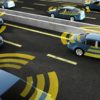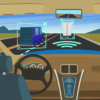
In recent years, the automotive sector has undergone several rapid changes, including connected and autonomous vehicles, advanced driver assistance systems, and smart transportation. Although they have increased driver comfort and safety, these innovations are also associated with technological challenges—especially in the areas of data privacy and cyber security. According to The Business Research Company, the automotive cyber security market size is expected to reach US$4.16 billion by 2026, growing at a rate of over 19%. The good news is that automakers are adding hardware and software for better cyber defenses. The bad news is that criminal hackers are gaining more advanced capabilities. Furthermore, there are now more attack surfaces to hack and exploit.
It is important not to undersell the scale of this potential cyber attack problem. In 2021, only 32% of all American cars were “connected,” sending and receiving data on a regular basis. By 2025, that number may top 50%. Then in another ten years, the percentage of new US vehicles that will be connected is predicted to hit 95%. This expands the cyber attack playing field from just under a third of all new vehicles to almost all new vehicles.
Types of Attacks
One clear trend is the growth of remote hacks, which includes both web-based and nearby wireless attacks such as key-fob hacks. Remote hacks make up the majority, now accounting for about 85% of attacks. Upstream, a cyber security and data management platform, revealed that cyber attacks on cars have soared 225% in the last three years. They found that the most common automotive cyber attacks saw a data or privacy breach, followed by car theft or a break-in via the car’s wireless key fob mechanism.
“Without effective cyber security, everything from the infotainment system to the engine control unit is at risk. The issue is that the move toward connected, autonomous vehicles is outpacing automotive cyber security measures and regulations,” explained Charles Griffiths, Head of Technology and Innovation at IT of website AAG. Once carjackers enter a car with a cloned key, they can hack the engine control unit to turn the engine on and drive away. For cars in motion, hackers can tamper with settings like the auto brake or steering, potentially causing a serious accident.
Upgraded Technology Comes with New Threats
The push towards more sophisticated levels of autonomy in the automotive sector is a challenge for security. Adding data-exchange and GPS signal-guidance to vehicles benefited drivers, but the extra technology increases the potential for significant cyber attack. Signals and data are weaknesses that we have intentionally introduced into vehicles in the last 20 years in favor of end-user benefits. And so far, these benefits have massively outweighed the risks.
Signal attack vectors are predicted to narrow over the next 20 years—making it harder for attackers and safer for drivers. Data interchange density problems and security weaknesses still exist, making vehicles the next version of the email hack (where there is unsecured data, there is money to be made from stealing that data). Currently, the responsibility for ensuring any such hack is unsuccessful is split between the individual vehicle component manufacturers, the overall vehicle manufacturer, and the seller of the vehicle. With the responsibility net unclear, unhardened security, and a vast array of potential data-targets, you have near perfect conditions for hackers.
Changing How We See Vehicles
Many technology-savvy people are very protective of their data. They’ll install the most impressive data security they can afford on their computer system, monitor their credit cards for fraud, and take other security measures. However, historically, people haven’t needed to think of their cars as a data-risk. As such, there isn’t a huge demand for ruggedized data security in vehicles. The connected car changes the very nature of what a car is, and mitigation of data-theft from connected cars has yet to mature. Until it does, high security is likely to remain a paid-for add-on for the foreseeable future.
Focus on Automotive Cyber Security
As the automotive industry continues to produce connected and autonomous vehicles, there is a need to better understand the safety and security of this technology. Automotive Cyber Security: Protecting the Vehicular Network is a five-course program that aims to foster the discussion on automotive cyber security solutions.
Contact an IEEE Content Specialist today to learn more about getting access to these courses for your organization.
Interested in the course for yourself? Visit the IEEE Learning Network.
Resources:
Bradley, Tim. (28 June 2022). Cyber attacks on cars up 225 percent: how hackers could be targeting your vehicle. Express.
Fyler, Tony. (21 July 2022). Cyber-Attack Vectors in the Automotive Sector – Part 1: Signal Attacks. TechHQ.
Fyler, Tony. (21 July 2022). Cyber-Attack Vectors in the Automotive Sector – Part 2: Data Attacks. TechHQ.
FWM. (August 2022). Evolution of the automotive sector – data privacy and cyber security. Financier Worldwide Magazine.
Juliussen, Egil. (29 June 2022). Automotive Cybersecurity: More Than In-Vehicle and Cloud. EE Times Europe.
Liao, Rita. (25 July 2022). Real Driverless Cars Legal in China’s Shenzhen. TechCrunch.
MRH. (27 July 2022). Smart Transportation Market Segments, Opportunity, Growth and Forecast by End-use Industry 2022-2030. This Is Ardee.
Straits Research. (25 July 2022). Advanced Driver Assistance System Market Size is projected to reach USD 57.90 Billion by 2030, growing at a CAGR of 18.3%. GlobeNewswire.
TBRC Business Research Pvt Ltd. (20 July 2022). Automotive Cybersecurity Global Market to Grow at Rate Of 19% Through 2026. EIN Newswires.

For the first time, autonomous vehicles (AVs) are now being tested on the streets of Austin, Texas and Miami, Florida, without drivers at the wheel. Designed by Argo AI, the vehicles are also being tested in Washington, D.C., Pittsburgh, Pennsylvania, Detroit, Michigan, and Palo Alto, California, as well as the German cities of Hamburg and Munich.
These tests are only the beginning. The company, whose autonomy platform uses lidar, sensors, and mapping software, is partnering with both ride-sharing service Lyft and Walmart’s delivery service to provide driverless taxi rides and autonomous grocery delivery.
Despite many advancements in AV technology, the road ahead remains uncertain. To replace human drivers, these vehicles need to be able to intuitively navigate roads and make split decisions the same way humans do. Current systems are still far from reaching this level of autonomy. However, some recent research breakthroughs may help engineers understand how to overcome this challenge.
Overly Conservative Decision Making Can Make AVs Easy to Fool
To make autonomous vehicles safer, engineers have traditionally designed them to be overly cautious. However, recent research from the University of California suggests this is part of the problem.
Since AVs cannot tell the difference between an object that makes its way onto a roadway by accident and an object placed on a roadside intentionally to provoke a physical denial-of-service attack, they can easily be tricked into making a wrong decision. For example, coming to a sudden stop in the middle of the road could potentially cause an accident.
Ironically, this problem is a result of engineers designing AV planning modules to operate with “an abundance of caution,” the study’s lead author, Ziwen Wan, a Ph.D. student in computer science at UC Irvine, explained to the UC newsroom.
“But our testing has found that the software can err on the side of being overly conservative,” Wan said, “and this can lead to a car becoming a traffic obstruction, or worse.”
New Machine Learning Technique Helps AVs Maintain Steady Flow at Intersections
Another obstacle for autonomous systems is knowing how to move together in busy intersections. A team of researchers from MIT recently discovered a machine learning technique that can help fleets of AVs navigate signalized intersections in a way that allows traffic to continue flowing uninterrupted, while at the same time making traveling faster and more fuel efficient.
Rather than relying on typical mathematical models to navigate complex intersections, the researchers turned to deep reinforcement learning, a model-free method that uses trial-and-error, in which the control algorithm learns to make a sequence of decisions, and is rewarded when it makes the right one. They refined this training further by using another technique known as reward shaping, in which they give the system some domain knowledge it would not be able to learn by itself. Using this method, the vehicle would be penalized if it stopped when it wasn’t supposed to brake. This helps the vehicle understand how to balance competing speed requirements that allow it to both improve travel time and reduce emissions.
Using simulations, the researchers found that if every vehicle on the road is autonomous, their control system could reduce fuel consumption by 18 percent and carbon dioxide emissions by 25 percent, while increasing travel speeds by 20 percent.
These research findings are just the start. With every advancement in AV technology, engineers are one step closer to creating a world in which traveling is easier, faster, and safer.
Preparing for Roadways of the Future
Learn about the latest developments in AV technology with training in foundational and practical applications through the IEEE Guide to Autonomous Vehicle Technology. Created by leading experts in the field, this online seven-course training program explores the latest strategies and business-critical research on autonomous, connected, and intelligent vehicle technologies
Connect with an IEEE Content Specialist today to learn more about purchasing the program for your organization.
Interested in purchasing the program for yourself? Access it now through the IEEE Learning Network (ILN)!
Resources
Bradbury, Rosie. (31 May 2022). There are now fully driverless cars with no human behind the wheel for safety on the roads of Miami and Austin. Business Insider.
Bell, Brian. (26 May 2022). Autonomous vehicles can be tricked into dangerous driving behavior. University of California.
Zewe, Adam. (17 May 2022). On the road to cleaner, greener, and faster driving. MIT News.

As modern vehicles grow increasingly connected, they are becoming a boon to cyber criminals in the process. According to the AV-TEST Institute, cyber attacks targeting vehicles increased to about 1.1 billion by the end of 2020, compared to roughly 65 million a decade ago.
A number of new standards, regulations, and best practices aim to help curb these attacks. Among these include 29 regulations from the United Nations Economic Commission for Europe (UNECE), the National Highway Traffic Safety Administration (NHTSA) best practices report, the SAE J3101 standard (which outlines hardware-protected security requirements for applications in ground vehicles), and the ISO/SAE 21434 standard, which is designed to safeguard vehicles from security risks across their lifetime. According to Security Boulevard, the new ISO/SAE 21434 standard specifies “various engineering requirements and recommendations for risk management in the concept, product development, production, operation, maintenance, and decommissioning of electrical and electronic systems in vehicles, components and interfaces.” This automotive cyber security standard is significant as it will spur automakers, suppliers, and product developers to adopt a vigorous cyber security culture.
What Will This Cultural Shift Entail?
The auto industry’s cyber security cultural evolution will consist of transformations that are both human and technical, according to Automotive World.
Human: Every employee will need a basic understanding of cyber security and techniques for reducing risks. This means that employees involved in vehicle design will have to undergo regular training. Select experts will need to oversee cyber security in various organizational divisions, special budgets for security will need to be developed, and new functions and features will need to undergo testing.
“Security has to be part of the thought process, but this is going to be quite a difficult transition for many organisations as it is a fairly new topic for the auto industry,” Dr. Dennis Kengo Oka, Principal Automotive Security Strategist at global software company Synopsys, told Automotive World. “This will require a cultural change to promote cyber security from the top down.”
Technical: New technical solutions will help safeguard vehicles from cyber criminals, along with services that help original equipment manufacturers and suppliers make more secure products. However, there will still be security challenges. For example, open-source software has saved time and money for the auto industry, but it also increases the chances of errors that create doorways for hackers. For this reason, it is essential to bring in services that specialize in automating open-source software management that can help identify potential issues.
“Large automotive organisations cannot develop everything on their own, and in many cases those open-source software components are very beneficial,” said Oka. “The challenge in using open-source software is managing it; you need to know which components and versions are being used in your products and systems, and if there are any vulnerabilities associated with those versions.”
As hackers grow more sophisticated, so will the challenge of securing modern vehicles. By creating a sound cyber security culture across the automotive industry from the ground-up, automakers and suppliers can ensure their vehicles and products are trustworthy and safe.
Understanding Automotive Cyber Security
Prepare your organization to better comprehend the security aspects of the automotive industry. An online five-course program, Automotive Cyber Security: Protecting the Vehicular Network aims to foster the discussion on automotive cyber security solutions and requirements for both intelligent vehicles and the infrastructure of intelligent transportation systems.
Contact an IEEE Content Specialist today to learn more about getting access to these courses for your organization.
Interested in the course for yourself? Visit the IEEE Learning Network.
Resources
Neustadter, Dana. (5 August 2021). Protecting Automotive Socs Starts With Secure Ip. Semiconductor Engineering.
Oka, Dennis Kengo. (19 July 2021). Practical solutions for a secure automotive software development process following ISO/SAE 21434. Security Boulevard.
Holmes, Freddie. (14 July 2021). Automakers must champion cyber security. Automotive World.

Modern vehicles come strapped with a variety of computerized and connected components. These features can make vehicles more appealing to drivers. However, they are also risky, because they can serve as hidden doorways for cyber criminals. Currently, there simply are not enough security features in modern vehicles to keep them invulnerable. Furthermore, as vehicles become more autonomous, the threats grow.
What are the Current Threats?
A few common techniques cyber criminals use to compromise modern vehicles include:
Hacking mobile apps: Car manufacturers and app makers are transforming mobile phone apps into remote controls. While this feature provides convenience, it also inadvertently gives hackers potential entryways into drivers’ personal data.
Malware: Cyber criminals can access unsecured Bluetooth devices and MP3 players. From there, they can use malware to hijack a vehicle. For example, a hacker could mask a virus as a music track, which lets them slip into the system as soon as the driver presses “play.”
Server break-ins: If a hacker manages to successfully penetrate a server, they could access all connected mobile apps, sales data, and controls. With this access, they can manipulate secondary vehicles connected to the server. Additionally, they may be able to access a car’s on-board diagnostic port, which they could then use to access its management system.
Over-the-air software (OTA) updates: Hackers can tap into weaknesses in these updates to access vehicle systems, allowing them to take control of vehicles from anywhere in the world.
What are the Future Threats?
Cyber security threats don’t end with today’s connected vehicles. There is growing evidence that future autonomous vehicles, which will come equipped with a broad range of artificial intelligence (AI) features, will pose additional dangers to drivers and pedestrians.
“The increased uptake of AI technologies has further amplified this issue with the addition of complex and opaque ML [machine learning] algorithms, dedicated AI modules, and third-party pre-trained models that now become part of the supply chain,” states a recent report on the cyber security challenges in autonomous vehicles from the EU Agency for Cybersecurity (ENISA) and Joint Research Centre (JRC).
Software-defined vehicles, whose components are enabled primarily through software, pose one of the biggest cyber security challenges in the near future. These vehicles come equipped with a number of software components that require regular over-the-air (OTA) updates throughout a vehicle’s lifetime. These software components often come from a number of different suppliers, and they must be reviewed for vulnerabilities.
As such, manufacturers will need to take on complex security strategies to ensure vehicles with these components are trustworthy.
Such strategies can include:
- Developing systems that require each OTA communication be formatted specifically within an applicable communications protocol, whether or not the source has been confirmed.
- Establishing a protocol in which a system shuts off specific subsystems if a vehicle does not establish an OTA connection over a certain period of time, which could protect it against a potential attack.
- Analyzing software for threats through composition analysis, penetration testing, and periodic risk assessments. (This depends on “defense-in-depth strategies,” such as secure updates, identity access management, secure boots, and isolation-through-virtualization methods.)
- Securing microchips in a vehicle’s electronic control units. Some methods include secure storage, tamper detection, and hardware acceleration for crypto-algorithms.
Cyber security will continue to represent a growing challenge for the automotive sector. As it does, vehicle makers will be wise to ensure their vehicles come equipped with the best security features possible. They also need to prepare for a future in which cyber security will be considered fundamental from the beginning to the end of a vehicle’s life cycle.
Focusing on Security and Safety
Prepare your organization to better comprehend the security aspects of the automotive industry. An online five-course program, Automotive Cyber Security: Protecting the Vehicular Network aims to foster the discussion on automotive cyber security solutions and requirements for both intelligent vehicles and the infrastructure of intelligent transportation systems.
Contact an IEEE Content Specialist today to learn more about getting access to these courses for your organization.
Interested in the course for yourself? Visit the IEEE Learning Network.
Resources
Smith, Jada. 25 June 2021. Protecting the Software-Defined Vehicle. CPO Magazine.
Stevens, Gary. (6 June 2021). Securing Computerized Vehicles from Potential Cybersecurity Threats. Trip Wire.
Hope, Alicia. (8 March 2021). EU Agency for Cybersecurity Says Autonomous Vehicles Highly Vulnerable to Various Cybersecurity Challenges. CPO Magazine.
Currently, 200 million digitally “connected vehicles” are traversing the world’s roadways, according to a recent white paper from the 5G Automotive Association (5GAA). By 2024, real-time traffic updates will be possible thanks to road infrastructure that will be digitally connected. By 2026, advanced vehicle-to-vehicle (V2V) capabilities will help bring automated vehicles another step closer to reality.
Today’s vehicles contain more software than ever before, as well as a constellation of automotive systems in their power locks, brakes, windows, entertainment, steering, and other features. Future vehicles will come equipped with advanced autonomous capabilities and driver-assistance systems (ASAD) that will make them even more complex.
These developments are happening rapidly. According to the research firm Frost & Sullivan, over 18 million new autonomous vehicles will be road-ready by the end of the decade. However, without appropriate regulations and advanced security features, these vehicles can become easy prey for hackers. With this in mind, many governments and automakers have already begun to take cyber security seriously.
Standards and Regulations
The United Nations Economic Commission for Europe (UNECE) is in the process of developing automotive cybersecurity regulations. Known as WP.29, the regulation would enhance cyber security and software updates in vehicles. It will be mandatory for all vehicle manufacturers in the European Union beginning July 2024. While manufacturers in Korea and Japan have agreed to comply with WP.29 within their own timelines, manufacturers in North America won’t be required to adhere to them.
Additionally, the International Organization for Standardization (ISO) is working on ISO/SAE 21434, a standard that aims to establish “cyber security by design” from the initial phase of a vehicle’s design. The organization is also working to establish ISO 24089, a standard that would regulate software updates in vehicles.
Five Top Cyber Security Threats for Automakers
In order to ensure their designs are safe from cyber security threats, vehicle manufacturers have five main concerns they will need to consider, according to Security Intelligence. These include:
- Complexity: Future vehicles will come equipped with interconnected architectures containing embedded telecommunications that will make them challenging to secure.
- Attacks on the power grid: Recently, research has demonstrated that it would be possible for hackers to disrupt the power grid or trigger a blackout by attacking multiple electric vehicles that are charging at the same time. To prevent this, standards will need to be developed that require vehicles to undergo testing and come equipped with cyber security features.
- Mobile devices: Increasingly, mobile phones are being used to control the various functions and features of connected vehicles such as windshield wipers, locks, and heat/air-conditioning. These devices pose a range of security threats, such as when a user inadvertently downloads malware, fails to update their operating system, or has a faulty password. If a hacker manages to take control of their phone, it wouldn’t be difficult for them to take control of the vehicle.
- Untrained employees: In order to ensure cybersecurity is secure across all facets of a vehicle’s design, every employee engaged in the design process must be adequately trained in cyber security.
- Securing financial features: Since many hackers will likely be motivated to steal financial information from drivers, special attention must be given to financial security features such as payment for fuel, tolls, and subscriptions.
Change is often difficult, but vehicle manufacturers will need to adjust to international regulations and standards in order to gain the public’s trust. By getting a head start in the process now, they can ensure their vehicles are safe when they’re ready to hit the roads.
Protecting Vehicles
As the automotive industry continues to work on intelligent and autonomous vehicles, there is a need to better comprehend the safety and security of this connected technology. Automotive Cyber Security: Protecting the Vehicular Network is a five course program that aims to foster the discussion on automotive cyber security solutions and requirements for not only intelligent vehicles, but also the infrastructure of intelligent transportation systems.
Contact an IEEE Content Specialist today to learn more about getting access to these courses for your organization.
Interested in the course for yourself? Visit the IEEE Learning Network.
Resources
Dhami, Indy. (2 October 2020). Top 5 Threat Vectors in Connected Cars and How to Combat Them. Security Intelligence.
Grau, Alan. (28 September 2020). Cybersecurity is Imperative for Connected Cars. Electronic Design.
Kohler, Arndt. (24 September 2020). Automotive Cybersecurity: New Regulations in the Auto Industry. Security Intelligence.
O’Halloran, Joe. (10 September 2020). Connected vehicle association makes call for wireless spectrum to develop use cases. ComputerWeekly.com.

While autonomous vehicles are expected to be far less prone to accidents than driver-controlled vehicles once they’ve undergone substantial training, they may pose a more serious threat. Due to the over-the-air hardware and software updates these vehicles routinely require, experts believe they have the potential to easily come under attack from hackers who can use them to wreak havoc on the road, potentially turning them into weapons.
“Hackers, for instance, could remotely interfere with a connected vehicle and disrupt safety-critical systems and functions including the engine, brakes, and steering wheel, causing the driver to lose control. On a larger scale, a hacker could enter a single vehicle and access an entire fleet, as a fleet is only secure as its least-secure vehicle,” Moshe Shlisel, CEO at GuardKnox, told Help Net Security.
This cyber security threat means autonomous vehicles will need to undergo intense security vetting.
Three Risk Levels to Consider
To better secure autonomous vehicles, three risk levels should be taken into account:
1) Critical hardware and software components that receive over-the-air updates must have supply chains that are adequately understood and protected.
2) The vehicle’s operating system must use an interface that is secure and equipped to repel cyber security threats.
3) Vehicle operating centers need to be secure.
Currently, there are no specific regulations mandating these considerations for autonomous vehicle cyber security. The SELF DRIVE Act, U.S. legislation surrounding the safety and innovation in testing and deployment of autonomous vehicles, requires a cyber security plan only for highly automated vehicles. Additionally, the U.S. Department of Transportation has not provided specific security regulations for advanced driver-assistance systems.
In Europe, the United Nations Economic Commission has been working on cyber security regulations for autonomous vehicles in the 54 countries it oversees. Under UNECE, regulations will mandate a Certificate of Compliance for Cyber Security Management Systems.
According to Shlisel, regulations are vital to ensuring autonomous vehicles are protected from cyber security threats, especially as these vehicles grow more connected and autonomous.
“Federal lawmakers should enact legislation–with the input of cyber security experts–setting uniform safety standards across the board for these vehicles. We see the beginnings of this in the U.S., as several bills–such as the SPY Car Act and AV START Act–have been drafted surrounding connected and autonomous vehicles, but no bill has yet succeeded,” he said.
Potential Security Risks of AV Crowdsourcing
Crowdsourcing platforms like the Japanese-based group Autoware can help speed innovation in the autonomous vehicle industry. However, information sharing within crowdsource environments, which have multiple contributors, pose potential cyber security threats. While crowdsourcing may speed solutions, it’s important to ask these questions:
- How will unknown contributors be validated?
- In what ways should the contributor be trusted, especially when it comes to their competence?
- Is the contributor actually acting as an enemy?
- Is it smart to unveil the code to anyone who can see it, particularly those who may have bad intentions?
- Validation will be expensive — who will pay for it?
One potential solution is to rely on smaller consortia instead of larger crowdsourcing platforms, writes Rahul Razdan for Forbes.
“It would seem that for safety critical systems smaller trusted consortia which make the active engineering trade-off between innovation velocity and validation costs makes a great deal of sense,” Razdan wrote, citing the Automotive Grade Linux as an example. “In addition, in this structure, contribution equity and consortium stability issues can be much more easily managed. When this process can reach ‘escape’ velocity in terms of the producers/consumers, there is a potential path to a more open system.”
Understand Autonomous Vehicle Technology
Prepare your organization for the latest developments in autonomous vehicle technology. Offer training in foundational and practical applications of autonomous, connected, and intelligent vehicle technologies. Developed by leading experts in the field—including Steve Vozar, CTO and co-founder of May Mobility—the IEEE Guide to Autonomous Vehicle Technology is a seven-course online training program.
Connect with an IEEE Content Specialist today to learn more about purchasing the program for your organization.
Interested in purchasing the program just for yourself? Access it through the IEEE Learning Network.
Resources
Razdan, Rahul. (9 May 2020). Open Source And Automotive Safety Critical Systems: What Are The Tradeoffs? Forbes.
Razdan, Rahul. (2 May 2020). Tesla Decepticons ? Is Automotive CyberSecurity A National Defense Issue? Forbes.
Zora, Mirko. (15 April 2020). Are we doing enough to protect connected cars? Help Net Security.
A future with widespread autonomous vehicle (AV) technology could include less traffic, safer roads, and interconnected vehicles that allow drivers to sit back and enjoy the ride. Expected to reach $556.67 billion USD by 2026, the market place for AV technology is growing quickly. However, the industry still has a long way to go. In order for autonomous vehicle technology to properly function, it must work in conjunction with other areas. The five most relevant are listed below.
Five Use Cases
5G
An autonomous vehicle is expected to generate 2 Petabytes (2 million GB) of data every year. It would take the best Wi-Fi available months to be able to transfer that amount of information. The nearly real-time speeds of 5G are 10 times faster than 4G. With its infrastructure and dense network, 5G makes the future of autonomous vehicles possible.
Latency
Decreased latency, another characteristic of 5G, can also benefit autonomous vehicles. 4G currently has a latency of 50 milliseconds, which can be seen as a large delay when it comes to passenger safety.
Smart Cities and the Internet of Things (IoT)
In order for an autonomous vehicle to make smart decisions, it requires information about its environment. Smart cities, which are IoT-ready, allow for that. A city that can report on traffic, signals, etc., can help a self-driving car move smarter and more easily navigate its way around town.
Data Management
Analyzing the amount of data a self-driving car produces takes time. With the potential of nearly 10 million cars hitting the road, edge computing can help streamline this analysis by examining it closer to the source.
V2X
Vehicle-to-everything (V2X) allows the information from autonomous vehicle sensors and other sources to travel through high-bandwidth, high-reliability, and low-latency channels. It creates an ecosystem that enables cars to communicate both with each other and with infrastructures including parking lots and traffic lights.
Not only can this improve vehicle safety, but it also gives drivers or passengers information about road conditions ahead, so that they can appropriately respond. When combined with Artificial Intelligence (AI), a self-driving car will be able to make that decision itself.
Roadblocks
A study from NAMIC found that 42% of surveyed consumers said that no matter how long the technology was available, they would refuse to ride in fully automated vehicles. Similarly, 46% of respondents were skeptical about using fully automated vehicles for ride-sharing services. In order to gain public trust, the right infrastructure needs to be in place.
Data management challenges, safety concerns, and high manufacturing costs are roadblocks that can prevent widespread autonomous vehicle adoption. However, as large manufacturers and automotive organizations continue to enhance and improve the technology, the potential for an autonomous future continues to grow.
Train Your Team in Autonomous Vehicle Technology
Prepare your organization for the latest developments in AV technology with training in foundational and practical applications of autonomous, connected, and intelligent vehicle technologies. Developed by leading experts in the field, the IEEE Guide to Autonomous Vehicle Technology is a seven-course training program offered online.
Interested in purchasing the program just for yourself? View it on the Learning Network, a new learning management platform!
Resources
(18 October 2019). Who Will Use Self-Driving Cars?. PYMNTS.
Zoria, Sophie. (1 November 2019). 5 Striking Uses For Autonomous Driving Technology. Customer Think.
Many academics struggle with the ethics behind the artificial intelligence (AI) that drives autonomous vehicles (AV), but AV makers would rather avoid the conversation.
Stefan Heck is the CEO of Nauto, and a rare engineer with a Ph.D. in philosophy. Nauto works with commercial vehicle fleets to install computer-vision and AI equipment that studies road conditions and driver behavior. Insights from the data collected about human driving patterns is then sold to AV companies. The data helps to shape how AVs behave on the road to help keep people safe.
But whatever those fleet drivers do influences the algorithm that makes the decisions, and that scenario would be implemented in millions of cars.
The idea is that strictly following the law isn’t always the right thing to do. For instance, Nauto’s data shows that drivers tend to exceed the posted speed limit by about 15 percent, and that it’s safer at times for other drivers to simply go with the flow rather than follow the speed limit and become a bottleneck. That’s when it’s likely that cars will go around the slower driver, which is risky and can increase the fatality rate.
However, Heck says, “We kill 1.2 million people globally every year in car accidents. Any delay we put on [automotive] autonomy is killing people.”
Humans feed machines the data upon which it will eventually make decisions, and those decisions could put people’s lives at risk. With a human behind the wheel, it may happen here and there, but driverless cars must grapple with it at scale.
Explore More
AI increasingly drives decisions in industries like health care, law enforcement, and banking. Whose ethics should it follow? Explore this question and more with IEEE.
Coming soon, the Guide to Autonomous Vehicle Technology is a seven-course program exploring the latest industry-leading strategies and business-critical research on autonomous, connected and intelligent vehicle technologies. The program was developed by top experts for AV technologies in partnership with IEEE Vehicular Technology Society. Pre-order this valuable program for your team today.
Resources
Foster, Tom. (Nov 2018). Sure, Self-Driving Cars Are Smart. But Can They Learn Ethics. Inc.