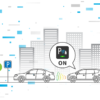
Shorter commutes, fewer crimes, reduced health burdens, and lower carbon emissions— smart city technologies provide residents with innovative technology, utility, and mobility for ease of living, economic growth, and sustainable development. An often-cited report by McKinsey Global Institute finds that “smart cities” can improve essential quality of life indicators by 10-30%.
A smart city uses the Internet of Things (IoT), artificial intelligence, and other data-gathering technology to help it run more efficiently. All smart cities have multiple layers working together. For example, a technology base consisting of sensors and smartphones connected to high-speed networks can produce raw data, which computers then process to provide insights and give alerts.
The Idea of a “Smart City” Is Evolving
Until recently, smart city technologies were primarily tools to increase efficiency behind the scenes. After more than a decade, it was recognized that intelligent “smart city” strategies start with the needs of the people, not the available technology. A July 2022 Harris Poll found that the overwhelming majority of 3,185 respondents (87%) thought it was important for their city to invest in emerging technologies. However, priorities will vary, and not all residents will value certain smart city technology. It’s critical to first consider which technologies will have the most positive and widespread impact. As demographics change, economic growth shifts, and problems evolve, municipalities must adapt to use technology to create better solutions and deliver a better quality of life.
Thus, the focus on smart cities has shifted toward incorporating smart technology into existing cities rather than starting from scratch. “It’s essentially become a matter of private entities operating with the permission and support of city or state governments,” according to Ellen Goodman, a professor at Rutgers Law School. “It’s using technology, in a way, to improve the provision of services.”
There are many cities at the forefront of this evolution. Barcelona adopted smart trash bins that signal when they are ready to be emptied. On traffic poles across Chicago, nearly 200 IoT devices analyze trends in noise pollution, climate, and traffic to inform proactive policies. Portland, Oregon, is reportedly on track to be the smartest U.S. city by using data to solve city-wide problems, such as cyclist traffic safety.
How Can Emerging Technologies Be Used in Cities?
By using smart technologies, cities could ultimately connect and integrate their various services and sectors—such as utilities, energy, healthcare, transportation, governance, and security—onto digital platforms. There are numerous ways to upgrade city services with intelligent technologies, including:
- Traffic Management: Smart systems can resolve congestion by informing drivers about roadblocks and delays. These systems can use Deep Learning algorithms to predict and reduce traffic, which will help lower carbon emissions.
- Environment Conservation: Artificial intelligence (AI) can analyze data on energy usage in order to decide where best to implement renewable energy sources. AI can also predict pollution levels which will help authorities make decisions best suited for the environment.
- Healthcare: Patient monitoring systems can detect chronic conditions in advance for better preventative care. Chatbots can provide medical assistance, informational support, and schedule appointments. Lessening the amount of unexpected or emergency visits can help free up local hospital resources.
- Waste Management: AI can distinguish between different waste types and monitor how many waste containers are filled, preventing overflows. AI can sort recyclables much more efficiently and quickly.
- Security: AI-enabled cameras can detect criminal behavior and instantly report it to the authorities. Drones can recognize human faces and compare them with a database to trace their identity and authenticate a person entering the city or restricted areas. However, this use case does raise ethical concerns with citizens.
Shape the Future of Cities
What smart cities will look like in the next ten years is being built right now. Technology professionals must evolve with it. A five-course training program from IEEE, Smart City Technologies: Transformation of Cities, will provide insight into how smart technology is altering levels of services in areas such as healthcare systems, transportation, energy distribution, and secured data communication.
What’s covered:
- Fundamentals of city transformations
- Role of smart healthcare in smart cities
- The need for smart city transportation systems
- Smart city energy distribution and its management
- Data privacy and security as applied to technology integration
Contact an IEEE Account Specialist to get organizational access.
Interested in the program for yourself? Visit the IEEE Learning Network.
Resources
Bocigas. Antonio. (24 October 2002). Smarter cities, smarter future. TechRadar.
Glover, Ellen. (4 November 2022). We Were Promised Smart Cities. Built In.
Islam, Arham. (15 October 2022). Understanding the Role of Artificial Intelligence (AI) in Building Smart Cities and Top Startups Working on it. Marketechpost.
McCarthy, Dan. (1 November 2022). These 5 charts show what US city residents think about smart city tech. Emerging Tech Brew.
Nordli, Brian. (26 September 2022). How the Array of Things Project Is Making Chicago a Smart City. Built In.
Qin, Sherry. (5 October 2022). Portland wants to be America’s most prominent smart city. Morning Brew.
Weotzel, Remes, Boland, et al. (5 June 2018). Smart cities: Digital solutions for a more livable future. Mckinsey & Company.

Not so long ago, the perception of virtual and augmented reality technologies was confined to science fiction. Movies like Avatar, The Matrix, and Total Recall painted a picture of what could be possible. Today’s virtual reality (VR) and augmented reality (AR) technology is not quite as immersive as these examples, but it is advancing rapidly. Today, many businesses are recognizing the benefits of using augmented and virtual realities to improve their operations. AR and VR are now being used for everything from prototyping and design to marketing, customer service, training, and productivity.
While experts are split about the evolution of a truly immersive “metaverse,” they do expect that augmented and mixed-reality enhancements will become more useful in people’s daily lives. This is especially true when it comes to smart cities that commonly use Internet of Things (IoT) technologies. However, according to Jamie Cameron, director of digital solutions at building security company Johnson Controls, “connectivity and technology are not the end goal for smart cities—they are the means to improving the quality of life for city residents.” And with virtual and augmented reality technologies, smart cities could be much smarter.
Making Smart Cities More Sustainable
With the UN projecting 68% of the world population to live in urban areas by 2050, the combined carbon footprint of the world’s different cities is only set to grow. Connected communities have an advantage because they can use IoT technology to understand the problem and then help solve it.
Smart cities can collect a wealth of data by installing different sensors around the community. These sensors can range from measuring air quality, as used by the London Air Quality Network; or detecting leaking water pipes, as Vodafone has recently partnered with SES Water to do. After collecting the data, the smart cities can decide what to do with all that information. A model of a city known as a digital twin can be used to simulate how different policies may affect a city. It can also provide insight into progress being made towards sustainability targets.
Creating Safer Smart Cities
The infrastructure and systems needed to successfully collect, analyze, and transmit information across a city are complex and comprehensive. Smart cities may represent a better way to plan and manage urban living, but they also serve as attractive new targets for cyber criminals. Digital enhancement enhances digital risk. To keep a smart city running smoothly, governments need tech-enabled support desks to help resolve problems. Smart cities are built from data, but what information is collected, who has access to it, and how it may be used are all highly contentious areas impacting public trust.
Enhancing the Quality of Life in Smart Cities
To improve the quality of life in urban spaces, city councils, urban planners, and developers are exploring cutting-edge digital solutions that can potentially power smart cities. Augmented reality technology is a promising solution. AR works by overlaying digital information in real-world environments: all you need is a smartphone and AR can provide constant feedback within smart cities, allowing everyone to make informed decisions in their day-to-day life. AR can make urban spaces more people centered and improve urban mobility, public safety, public health, and tourism.
Keep up with AR/VR Technology
Information and communication technologies have made smart cities a reality. However, augmented reality and virtual reality technologies have shifted the smart city paradigm. Practical Applications of Virtual and Augmented Reality in Business and Society: The Case of Smart Cities will help keep you current with AR/VR technology.
Interested in the course? Visit the IEEE Learning Network.
Resources:
Anderson, Janna and Raine, Lee. (30 June 2022). The Metaverse in 2040. Pew Research Center.
Dumbell, Katherine. (18 July 2022). How smart technology can make cities more sustainable? Verdict.
Galil, Eran. (16 July 2022). Improving the customer experience with virtual and augmented reality. VentureBeat.
Imperial College London. (21 July 2022). About Londair. LondonAir.
Lee, Giacomo. (6 January 2022). Meet the tech CEO who survived a flood and built a digital twin of Earth. Verdict.
Manser, James. (5 June 2020). How IoT tech could save the UK three billion litres of water a day. Vodafone.
Milewa, Gergana. (12 September 2021). How Smart Cities Can Use Augmented Reality Technology. AR Post.
Rosenburg, Louis. (28 December 2021). Why AR, not VR, will be the heart of the metaverse. VentureBeat.
Open Access News. (15 November 2021). Connectivity: The fundamental ingredient of a successful smart city. Open Access Government.
Open Access News. (28 June 2022). The cities of the future are smart – but we must also make them secure. Open Access Government.
A future with widespread autonomous vehicle (AV) technology could include less traffic, safer roads, and interconnected vehicles that allow drivers to sit back and enjoy the ride. Expected to reach $556.67 billion USD by 2026, the market place for AV technology is growing quickly. However, the industry still has a long way to go. In order for autonomous vehicle technology to properly function, it must work in conjunction with other areas. The five most relevant are listed below.
Five Use Cases
5G
An autonomous vehicle is expected to generate 2 Petabytes (2 million GB) of data every year. It would take the best Wi-Fi available months to be able to transfer that amount of information. The nearly real-time speeds of 5G are 10 times faster than 4G. With its infrastructure and dense network, 5G makes the future of autonomous vehicles possible.
Latency
Decreased latency, another characteristic of 5G, can also benefit autonomous vehicles. 4G currently has a latency of 50 milliseconds, which can be seen as a large delay when it comes to passenger safety.
Smart Cities and the Internet of Things (IoT)
In order for an autonomous vehicle to make smart decisions, it requires information about its environment. Smart cities, which are IoT-ready, allow for that. A city that can report on traffic, signals, etc., can help a self-driving car move smarter and more easily navigate its way around town.
Data Management
Analyzing the amount of data a self-driving car produces takes time. With the potential of nearly 10 million cars hitting the road, edge computing can help streamline this analysis by examining it closer to the source.
V2X
Vehicle-to-everything (V2X) allows the information from autonomous vehicle sensors and other sources to travel through high-bandwidth, high-reliability, and low-latency channels. It creates an ecosystem that enables cars to communicate both with each other and with infrastructures including parking lots and traffic lights.
Not only can this improve vehicle safety, but it also gives drivers or passengers information about road conditions ahead, so that they can appropriately respond. When combined with Artificial Intelligence (AI), a self-driving car will be able to make that decision itself.
Roadblocks
A study from NAMIC found that 42% of surveyed consumers said that no matter how long the technology was available, they would refuse to ride in fully automated vehicles. Similarly, 46% of respondents were skeptical about using fully automated vehicles for ride-sharing services. In order to gain public trust, the right infrastructure needs to be in place.
Data management challenges, safety concerns, and high manufacturing costs are roadblocks that can prevent widespread autonomous vehicle adoption. However, as large manufacturers and automotive organizations continue to enhance and improve the technology, the potential for an autonomous future continues to grow.
Train Your Team in Autonomous Vehicle Technology
Prepare your organization for the latest developments in AV technology with training in foundational and practical applications of autonomous, connected, and intelligent vehicle technologies. Developed by leading experts in the field, the IEEE Guide to Autonomous Vehicle Technology is a seven-course training program offered online.
Interested in purchasing the program just for yourself? View it on the Learning Network, a new learning management platform!
Resources
(18 October 2019). Who Will Use Self-Driving Cars?. PYMNTS.
Zoria, Sophie. (1 November 2019). 5 Striking Uses For Autonomous Driving Technology. Customer Think.