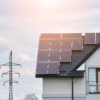
If you’ve seen solar panels on rooftops or wind power generated off coastal locales, you’re witnessing examples of DERs. Use of smart thermostats, electric vehicles, EV charging systems, fuel cells, or heat pumps also shows DERs. Additionally, participation in a local microgrid demonstrates the use of distributed energy resources, also known as DERs.
According to the U.S. Environmental Protection Agency (EPA), distributed energy resources involve “a variety of technologies that generate electricity at or near where it will be used” rather than centralized sources. DERs support single homes, businesses, huge industrial facilities, college campuses, and entire municipalities. This is often achieved through a microgrid that connects to a central utility’s distribution lines. They are popular because they reduce electricity costs, improve power quality, and support renewable energy. They’ve become increasingly popular.
Benefits of Distributed Energy Resources
Thanks to DERs, homes and businesses can reduce grid dependence. The grid is aging, with portions over a century old. DERs also minimize power outage risks, which are rising due to severe storms and disasters. At the same time, DERs offer users greater control. They allow users to generate energy for personal use, sell it, or modify demand.
As such, one doesn’t have to look far to see evidence of the growing market and demand for DERs worldwide. For instance:
- On the solar panel front, Fortune Business Insights predicts the global solar power market will nearly double. It is expected to grow from US$254 billion in 2023 to US$437 billion by 2032.
- Statista projects the global battery energy storage market will grow from US$5 billion in 2023 to US$18 billion by 2030, more than tripling.
- Electric cars, which were 2% of all vehicles globally in 2018, accounted for about 18% of cars sold in 2023.
- Smart thermostat sales in the U.S. are set to triple, growing from roughly US$1.3 billion in 2022 to US$3.9 billion by 2029.
Growing Demand
The outlook for DERs continues to be positive. Declining initial price points are driving demand for these technologies. Additionally, federal support and funding through the Inflation Reduction Act are boosting demand. They offer financial rebates and incentives to encourage adoption. Similarly, the U.S. Federal Energy Regulatory Commission’s Order No. 222 will compensate DER owners for power provided to the grid. According to the World Resources Institute, this will create “a new long-term value stream for the people and entities using these resources.”
Similar actions are happening globally to support DER proliferation. In Europe, the ‘European Green Deal’ and ‘Clean Energy for all Europeans’ initiatives promote renewable energy sources and DERs. The International Energy Agency confirms DERs are crucial for China’s energy transformation.
Ultimately, experts confirm that the ongoing transition to DERs will promote a more reliable, energy-efficient, and equitable energy system worldwide.
Challenges Abound
While DERs offer benefits such as resilience, cost-effectiveness, and sustainability, challenges exist too.
Harmonious operation of these systems requires investments in new technology. With many small-scale DERs activated worldwide, experts warn of potential issues. Integration with central power sources can lead to quality, compatibility, and reliability challenges. These will need more grid management control.
For these reasons, the IEEE Standard 1547 is crucial. It ensures the interconnection, interoperability, and safety of DERs connected to the grid.
“Before this standard, connecting renewable energy to the grid was challenging.” Christopher Sanderson, an industry expert, explained, “Each technology had its own protocols and requirements.” The IEEE Standard 1547 allows different DERs to work together seamlessly, he stated. It ensures electricity from various sources is reliably and efficiently integrated into the grid.
Navigate IEEE Standard 1547 Through a Targeted Course Program
Introduction to IEEE Standard 1547-2018: Connecting Distributed Energy Resources is a six-course program by IEEE. It trains technical teams on implementing this important standard. The course covers testing, verification, interoperability, and power quality issues from DER-grid interconnections.
Connect with an IEEE Content Specialist today to learn more about getting access to this program for your organization.
Interested in access for yourself? Visit the IEEE Learning Network (ILN).
Resources
Hurst, R.W. What is Distributed Generation? Distributed Energy Resources. The Electricity Forum.
Distributed Generation of Electricity and its Environmental Impacts. United States Environmental Protection Agency.
Richmond-Crosset, Kyle and Greene, Zachary. (30 September 2022). How Distributed Energy Resources Can Lower Power Bills, Raise Revenue in US Communities. World Resources Institute.
(May 2022). Unlocking the Potential of Distributed Energy Resources. International Energy Agency.
Ali, Junaid. (16 August 2024). The Future of Energy and Distributed Power. Forbes.
(5 August 2024). Solar Power Market Size, Share & Industry Analysis, By Technology. Fortune Business Insights.
Sanderson, Christopher. (30 June 2024). The Power of Standards: How IEEE-1547 Shapes Our Energy Future. LinkedIn.
Will Distributed Energy Resources (DERs) Change How We Get Our Energy? European Parliament.
Prospects for Distributed Energy Systems in China. International Energy Agency.
Today’s modern smart grid connects a variety of distributed energy resource assets to the power grid. This creates a diverse and disparate system, which both individuals and power companies can impact, with enormous benefits. Distributed energy collection assets (such as solar panels) are essential to increase the use of green energy, which helps the environment and can reduce costs. Furthermore, consumers have greater insight into their energy usage through modern smart grid technology, allowing them to better conserve energy.
However, an individual’s increased access to the grid can jeopardize the security of the entire system.
Consumers Putting the Smart Grid at Risk?
Because they are often installed and controlled by the consumer, distributed energy resources can put the power grid as a whole at risk. For example, consumers who do not properly secure their devices and/or networks are prime targets for attack. If there are enough compromised devices on a smart grid, bad actors can destabilize the power system and cause significant damage.
Efforts to Increase and Standardize Smart Grid Security
There are efforts underway to increase the security of the smart grid in order to harness the benefits while avoiding the security pitfalls. For example, the European Network for Cyber Security (ENCS) and the European Distribution System Operators’ Association (E.DSO) recently released suggested cyber-security requirements for smart meters (SM) and data concentrators (DC). These guidelines help network operators choose SMs and DCs that enhance security of the smart grid. By creating a consistent set of requirements, smart grids across Europe have a built-in baseline of security.
Planning a Secure Smart Grid
In order to avoid catastrophic results, today’s smart grid operator needs to have a plan in place that accounts for security.
As Ed Wood, CEO of Dispersive Networks, writes in SC Magazine, “Attack-resilient, secure virtual IP networks can be designed and rolled out, which will enable utilities to ensure a more secure overall grid. Advanced virtual networking software that offers the highest level of security is available today and can be integrated directly into Distributed Energy Resource assets, enabling them to ‘plug-n-play’ into ultra-resilient virtual cloud networks. Leveraging the processing and memory of these devices and the public Internet is essential to lowering costs.”
This tactic can help secure the smart grid while taking advantage of the environmental and cost-saving benefits of distributed energy resources.
Modernizing the Smart Grid from IEEE
Want to learn more about the smart grid? Check out Modernizing the Smart Grid, a new 4-course online learning program from IEEE.
One of the biggest frontiers in electrical engineering today is the development and implementation of smart grid technology. Fueled by the global demand for greener technologies and alternative fuels, environmentally-friendly smart grid technology can stimulate stagnated economies. It also has the potential to change the way power is delivered to electricity consumers around the world.
Modernizing the Smart Grid, now available on the IEEE Learning Network, is designed to get you and your team up to speed quickly on the latest smart grid technologies. Interested in bulk discounts for your organization? Contact us today, and we’ll put you in touch with an IEEE Account Specialist.
Resources:
Wood, Ed. (18 Jul 2019). How Securing DER Smart Grids Differs from Securing Traditional Energy Grids, and Why it Matters. SC Magazine.
SmartCitiesWorld News Team. (23 Jul 2019). Europe seeks to harmonise smart grid security requirements. SmartCitiesWorld.