Today’s modern smart grid connects a variety of distributed energy resource assets to the power grid. This creates a diverse and disparate system, which both individuals and power companies can impact, with enormous benefits. Distributed energy collection assets (such as solar panels) are essential to increase the use of green energy, which helps the environment and can reduce costs. Furthermore, consumers have greater insight into their energy usage through modern smart grid technology, allowing them to better conserve energy.

However, an individual’s increased access to the grid can jeopardize the security of the entire system.

Consumers Putting the Smart Grid at Risk?

Because they are often installed and controlled by the consumer, distributed energy resources can put the power grid as a whole at risk. For example, consumers who do not properly secure their devices and/or networks are prime targets for attack. If there are enough compromised devices on a smart grid, bad actors can destabilize the power system and cause significant damage.

Efforts to Increase and Standardize Smart Grid Security

There are efforts underway to increase the security of the smart grid in order to harness the benefits while avoiding the security pitfalls. For example, the European Network for Cyber Security (ENCS) and the European Distribution System Operators’ Association (E.DSO) recently released suggested cyber-security requirements for smart meters (SM) and data concentrators (DC). These guidelines help network operators choose SMs and DCs that enhance security of the smart grid. By creating a consistent set of requirements, smart grids across Europe have a built-in baseline of security.

Planning a Secure Smart Grid

In order to avoid catastrophic results, today’s smart grid operator needs to have a plan in place that accounts for security.

As Ed Wood, CEO of Dispersive Networks, writes in SC Magazine, “Attack-resilient, secure virtual IP networks can be designed and rolled out, which will enable utilities to ensure a more secure overall grid. Advanced virtual networking software that offers the highest level of security is available today and can be integrated directly into Distributed Energy Resource assets, enabling them to ‘plug-n-play’ into ultra-resilient virtual cloud networks. Leveraging the processing and memory of these devices and the public Internet is essential to lowering costs.”

This tactic can help secure the smart grid while taking advantage of the environmental and cost-saving benefits of distributed energy resources.

Modernizing the Smart Grid from IEEE

Want to learn more about the smart grid? Check out Modernizing the Smart Grid, a new 4-course online learning program from IEEE.

One of the biggest frontiers in electrical engineering today is the development and implementation of smart grid technology. Fueled by the global demand for greener technologies and alternative fuels, environmentally-friendly smart grid technology can stimulate stagnated economies. It also has the potential to change the way power is delivered to electricity consumers around the world.

Modernizing the Smart Grid, now available on the IEEE Learning Network, is designed to get you and your team up to speed quickly on the latest smart grid technologies. Interested in bulk discounts for your organization? Contact us today, and we’ll put you in touch with an IEEE Account Specialist.


Resources:

Wood, Ed. (18 Jul 2019). How Securing DER Smart Grids Differs from Securing Traditional Energy Grids, and Why it Matters. SC Magazine.

SmartCitiesWorld News Team. (23 Jul 2019). Europe seeks to harmonise smart grid security requirements. SmartCitiesWorld.

As anyone responsible for supply chain management can tell you, the demand for accountability and tracking at every step of the supply chain just continues to grow. For example, consumers want to know where their vegetables were sourced, how they were grown, handling methods, refrigeration temperatures in transit, how long since they have been harvested, etc. However, that’s only the beginning of the information required of supply chain management professionals.

With increasingly sophisticated tracking and handling of the entire supply chain, both sensitive financial and confidential data can be shared between the supplier and the customer. And that’s where blockchain comes in.


How It Works

First, what is a blockchain? At its core, a blockchain is simply a distributed record-keeping system. Each encrypted transaction record is added to the blockchain, securely linked to the record before it. Because everyone on the blockchain has access to an encrypted copy of the record, it is almost impossible to alter. This greatly enhances the security of records, and it also has massive security implications.


Securing the Supply Chain

David Higgins shares a perfect example of the need for enhanced digital security of the supply chain in his article Supply Chain Meets Blockchain: A Perfect Match. He writes, “Following allegations of nation-states targeting the supply chain at the chip level to embed backdoors into both B2B and consumer technologies, organizations are increasingly embracing blockchain to secure their supply chains and reduce the risk of fraud. The distributed nature of blockchain makes it very well suited to validate every step in the supply chain – including the authenticity of hardware and software.”

Blockchain’s secure nature offers a number of interesting use cases in the supply chain field. A number of industry leaders, including Carrefour, Target, and Panalpina, are exploring blockchain pilot programs to see how the technology can be leveraged for supplier certification, trade document digitization, and more.


Paperless Supply Chain

Another benefit of using blockchain for supply chain is the potential for a completely paperless process. Not only is this process more secure with better data provided at every step, it’s also good for the environment. Samsung recently demonstrated the potential for this type of transaction when they received the very first paperless shipping container ever delivered. This transaction was financed through the blockchain, and every step was tracked.

“The first shipments to use the platform gave us a good insight into the possibilities of large-scale implementation. As cargo recipient, we benefited from real time information and advance availability of digitized cargo documentation. We can re-design our processes more efficiently, enabling us to act based on real-time events and trusted data. Ultimately, this will strengthen our service proposition to customers,” said Robert van der Waal, Deputy President of Samsung SDS EU/CIS.

It is clear that blockchain represents an important future for the supply chain industry. In fact, the global blockchain supply chain market size is projected to reach nearly $10 million by 2025 according to a report published by Global Info Research.


Is Your Organization Ready for Blockchain?

To help your organization better understand blockchain use cases at an enterprise level, IEEE has recently released a 5-course program series called Enterprise Blockchain for Healthcare, IoT, Energy, and Supply Chain. Learn about the importance of blockchain in applications beyond just finance as well as how they may affect your organization.

Interested in a license for your organization? Let us know and we’ll connect you with an IEEE Account Representative who can give you the details.

Purchasing the program for yourself instead? View the courses on the IEEE Learning Network, a new learning management platform!


Resources:

Higgins, David. (25 Jul 2019). Supply Chain Meets Blockchain: A Perfect Match. SecurityBoulevard.com.

Green Car Congress. (26 Jul 2019). First Blockchain Container Shipped to Rotterdam; DELIVER. GreenCarCongress.com.

VMR. (25 Jul 2019). Blockchain In Supply Chain Market Is Thriving Worldwide, Business Status and Industrial Outlook till 2024. RiseMedia.net.


Depending on how many of the 30 billion Internet of Things (IoT) devices forecast for global deployment by 2020 rely on the cloud, managing the deluge of IoT-generated data makes proper processing seem near impossible. Traditional cloud computing has serious disadvantages, including data security threats, performance issues, and growing operational costs. Because most data saved in the cloud has little significance and is rarely used, it becomes a waste of resources and storage space.

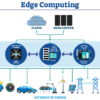
In many instances, it would be incredibly beneficial to handle data on the device where it’s generated. That’s where edge computing comes in. Edge computing helps decentralize data processing and lower dependence on the cloud.

Edge computing has several advantages, such as:

  • Increasing data security and privacy
  • Better, more responsive and robust application performance
  • Reducing operational costs
  • Improving business efficiency and reliability
  • Unlimited scalability
  • Conserving network and computing resources
  • Reducing latency


Edge Computing Use Cases

Prime use cases, which take full advantage of edge technology, include:

Autonomous Vehicles: The decision to stop for a pedestrian crossing in front of an autonomous vehicle (AV) must be made immediately. Relying on a remote server to handle this decision is not reasonable. Additionally, vehicles that utilize edge technology can interact more efficiently because they can communicate with each other first as opposed to sending data on accidents, weather conditions, traffic, or detours to a remote server first. Edge computing can help.

Healthcare Devices: Health monitors and other wearable healthcare devices can keep an eye on chronic conditions for patients. It can save lives by instantly alerting caregivers when help is required. Additionally, robots assisting in surgery must be able to quickly analyze data in order to assist safely, quickly, and accurately. If these devices rely on transmitting data to the cloud before making decisions, the results could be fatal.

Security Solutions: Because it’s necessary to respond to threats within seconds, security surveillance systems can also benefit from edge computing technology. Security systems can identify potential threats and alert users to unusual activity in real-time.

Retail Advertising: Targeted ads and information for retail organizations are based on key parameters, such as demographic information, set on field devices. In this use case, edge computing can help protect user privacy. It can encrypt the data and keep the source rather than sending unprotected information to the cloud.

Smart Speakers: Smart speakers can gain the ability to interpret voice instructions locally in order to run basic commands. Turning lights on or off, or adjusting thermostat settings, even if internet connectivity fails would be possible.

Video Conferencing: Poor video quality, voice delays, frozen screens— a slow link to the cloud can cause many video conferencing frustrations. By placing the server-side of video conferencing software closer to participants, quality problems can be reduced.

Further Enhanced Security

Although edge computing is a sensible alternative to cloud computing in many instances, there’s always room for improvement. According to “Reconfigurable Security: Edge Computing-Based Framework for IoT”, a paper published by IEEE Network, existing IoT security protocols need improvement.

A possible solution to better secure IoT-generated data is an IoT management element called the Security Agent. This new piece would use routers and other near-edge boxes to manage the computing the IoT device could not take on. In addition to being more secure, it’ll simplify the management of keys. The Security Agent box has the capability of running copious sensors that are difficult to access. The researchers’ state that if the needed authentification is not completed quickly, IoT applications will fail.

Getting Up to Speed

Designed for organizations investing heavily in this critical technology, IEEE Introduction to Edge Computing is a five-course program designed to train your entire team to support edge computing. The online, on-demand courses included in this program are:

  • Overview of Edge Computing
  • Practical Applications of Edge Computing
  • Research Challenges in Edge Computing
  • Designing Security Solutions for Edge, Cloud, and IoT
  • Tools and Software for Edge Computing Applications

To learn more about getting access to these courses for your organization, connect with an IEEE Content Specialist today.


Resources

Aleksandrova, Mary. (1 Feb 2019). The Impact of Edge Computing on IoT: The Main Benefits and Real-Life Use Cases. Eastern Peak.

Nelson, Patrick. (10 Jan 2019). How edge computing can help secure the IoT. Network World.

Caulfield, Matt. (23 Oct 2018). Edge Computing: 9 Killer Use Cases for Now & the Future. Medium.

Talluri, Raj. (24 Oct 2017). Why edge computing is critical for the IoT. Network World.


There is a veritably deafening buzz around blockchain at the moment as it’s the technology du jour. And rightfully so, as it ticks a lot of boxes: it’s decentralized, anonymous, and immutable. It also promises security through truth and transparency.

Amid the excitement about it, brands are rushing to embrace the ledger technology. Upon announcing that they’re working with, or will soon incorporate, blockchain technologies, their stock price skyrockets.

The Blockchain Bounce Phenomenon

This is called blockchain bounce.

Don’t believe us? Take Overstock, for example, whose share price rose +200% post-announcement of a loyalty plan built on blockchain.

Or restaurants like Chanticleer Holdings (whose brands include American Burger Co. and Little Big Burger) and Hooter’s. Both stocks became hot simply because of their association with blockchain.

It also happened to Kodak recently, when it partnered with WENN Digital to launch a blockchain-powered image rights platform, called KODAKOne. Shares of Eastman Kodak’s stock surged more than 30% on the announcement, closing at $6.80.

As the New York Times noted, these bold gambles have had mixed reactions among investors: some are excited, others confused, with a majority curious about “wading into dubious business deals” in search of instant growth through blockchain bounce.

Are businesses that attach themselves to blockchain merely a fad? Or will utilizing blockchain to provide the building blocks for a company’s future have an Amazon-like effect, as Starbucks Chairman Howard Shultz predicts? Could the blockchain bounce make a difference for your company? Share your thoughts in the comments below!

blockchain innovation at work ieee certificate programs courses online engineering courses
Coming Soon: IEEE Introduction to Blockchain Technology

It’s clear blockchain isn’t going away anytime soon. Which is why it’s in your business’ best interests to learn as much as possible, as soon as possible, about it. To make sense of the recent blockchain revolution, you’ve got to understand what a blockchain really is and what it’s capable of doing. The best place to start is with the new IEEE Introduction to Blockchain Technology 3-course program. Pre-order for your company now and save.