




Summary: Technical writing is a critical skill for engineers and technical professionals who want to advance their careers and ensure their work has real impact. Clear, structured communication helps engineers document processes, explain research, influence decisions, and meet the expectations of scientific audiences.
In fast‑moving technical fields, we devote countless hours to mastering new tools, frameworks, and methodologies. Yet one of the most critical skills for career advancement often receives far less attention: technical writing.
Whether you are an engineer, researcher, or subject matter expert, your ability to communicate clearly is just as important as your technical expertise. Without strong writing, your insights, data, and innovations may never reach the colleagues, stakeholders, and journals that need them.
The Professional Cost of Poor Communication
Writing is often mislabeled as a “soft skill,” but in engineering and scientific environments, it is a core professional competency. Clear communication enables you to:
- Influence decision-makers.
- Document processes and methodologies
- Justify budgets and resource needs
- Explain research findings
When writing is unclear, overly complex, or poorly structured, the value of your work becomes harder to recognize. A project proposal may be overlooked, a research paper may be rejected, or a technical recommendation may be misunderstood. Clarity is not optional; it is essential for professional impact.
The Structure of Technical Authority
Technical writing differs from other forms of communication because it relies on logic, structure, and predictability. Readers in scientific and technical fields expect information to follow established patterns. When writing deviates from these expectations, comprehension suffers.
One of the most widely used frameworks is the IMRaD structure, common in scientific and technical publications:
- Introduction: What problem are you addressing?
- Methods: How did you study or approach the problem?
- Results: What did you find?
- Discussion/Conclusions: What do the findings mean for the field?
Mastering IMRaD not only strengthens your writing, it allows you to present your work in a way that aligns with the professional standards of organizations like IEEE.
From Research to Publication: Elevating Your Technical Writing
Recognizing the importance of strong writing is the first step. The second is developing a systematic approach to the writing process. To support professionals in this journey, IEEE offers a comprehensive program: From Research to Publication: A Step-by-Step Guide to Technical Writing.
Developed in collaboration with the IEEE Professional Communication Society, this course is designed for those who must produce technical journal articles, reports, or research papers, especially those without formal training in technical communication.
Course Program Overview
This course provides deep overviews of the traditional formats and expectations of scientific articles. Participants receive practical tools to sharpen their skills, including strategies for using Generative AI effectively within the writing workflow.
| What You Will Learn | Why it Matters |
| IMRaD Pattern | Ensures your paper follows standard scientific expectations. |
| Editing Techniques | Improves clarity and reduces technical jargon. |
| Authorship Issues | Navigates the complexities of team-based research. |
| Publishing Strategy | Helps you identify the right journals for your work. |
Who Should Attend
This program is specifically designed for:
- Graduate and undergraduate students writing their first academic articles
- Early career professionals looking to establish a publication record
- Subject matter experts who need a refresher on formal reporting
The course is taught by Dr. Traci Nathans-Kelly, Director of the Engineering Communications Program at Cornell University. With over 30 years of experience, Dr. Nathans-Kelly specializes in helping technical experts become impactful contributors. She is a prominent figure within IEEE, serving on the Board of Governors for the Professional Communication Society and as an editor for the IEEE Professional Engineering Communication book series.
Invest in Your Professional Voice
Your technical skills may solve complex problems, but your writing skills ensure those solutions are understood, adopted, and recognized. By strengthening your ability to write for a technical audience, you amplify the reach and impact of your work.
For Individuals
Interested in access for yourself? Visit the IEEE Learning Network (ILN) to explore the From Research to Publication: A Step-by-Step Guide to Technical Writing course. Participants earn professional development credit and a shareable digital badge. IEEE members save US$100.
For Organizations
Connect with an IEEE Content Specialist today to learn how to get access to this program for your organization.

More than 1.4 billion people in the world speak the English language. Used to communicate to global audiences, English is currently spoken in more than 75 countries and non-sovereign entities around the world. It’s also one of the most common languages used in the fields of business, science, and technology worldwide. For that reason, research shows that honing one’s skills in English can benefit both native and non-native English speakers alike. However, many engineers tend to focus on honing their technical skills and often spend less time improving their English proficiency in the areas of reading, writing, and speaking. This has led society to routinely joke that an individual “writes like an engineer”– something that isn’t necessarily a compliment!
According to a Penn State University study, which explored why industry professionals often feel that engineering graduates possess weak English and communication skills, the authors concluded that “part of the disparity arises because the communication assignments that engineering students perform in college significantly differ from the writing situations (audiences, purposes, and occasions) that engineering graduates encounter in industry.”
As such, a range of studies confirm that time spent refreshing and strengthening one’s English and communication skills is a great investment that can pay engineers tremendous dividends.
For instance, in a 2024 Pearson survey of 5,000 individuals worldwide for whom English is a second or additional language, four out of five respondents believe that strong English language skills can contribute to as much as an 80% increase in salary. At the same time, roughly half of those surveyed feel that strong English skills will also expand their range of job opportunities, enhance their ability to be promoted to more senior positions in their field, and ‘futureproof’ them against the threat of artificial intelligence (AI) obsoleting their job.
These aren’t just perceptions.
English and Communications Skills Affect On Career Trajectory
According to industry speaker and communications consultant Skip Weisman, engineers without strong communication skills often risk damaging important relationships with colleagues and undermining their own objectives when they speak or write. The Engineering Management Institute agrees, noting that strong English skills can help engineers better communicate with and present concepts to their management as well as create more useful technical documents that share product and project specs or findings. Strong communication skills may also help engineers to lead teams and interact more effectively with other non-technical divisions of their company, such as marketing and sales.
Without proficiency in English skills, an engineer’s career trajectory may be limited. For example, Wisconsin-based Rockwell Automation is among the many high-tech companies which regularly screen candidates for strong proficiency in English reading, writing, and speaking based on the importance of those skills to their employees’ effectiveness and success.
Engineers are inherently creative and analytical problem-solvers. However, their jobs also require teamwork and consensus-building, public speaking and listening skills, and a strong ability to provide clear written and verbal communication of often-complex technical concepts in order to express themselves and bring their ideas to reality. As a result, amid the many important proficiencies that engineers require for career success, a recent analysis by Indeed ranked “effective written and oral communication skills” among the top three most critical.
Build Your Technical English Skills with Training from IEEE
IEEE English for Technical Professionals is designed to address the communication gap and help engineers and technical professionals, both native and non-native English speakers, to improve their language skills in a way that fits the needs and priorities of working adults in technical fields.
Ideal for entry or mid-level technical professionals, engineers, and managers, this 14-lesson program imparts English language standards via practice activities that are essential for an engineer’s daily success. The modules are designed to strengthen reading, writing, listening, and speaking skills with a speech-to-text feature. Whether discussing a project with peers, submitting a technical proposal to a funding source, or justifying technical findings to a supervisor, this course program helps learners build confidence and enhance their effectiveness and productivity on the job.
Connect with an IEEE Content Specialist today to learn more about how to offer this program within your organization.
Interested in the course program for yourself? Visit the IEEE Learning Network (ILN).
Resources
(12 March 2024). English Skills Have Life-Changing Impact. Pearson.
(30 September 2022). 20 Traits or Skills of Successful Engineers. Indeed.
Hill, Peter. (29 January 2019). How Good Writing Skills Can Benefit Your Engineering Career. Engineering Management Institute.
Koelsch, James. (1 December 2011). Is Writing an Essential Skill for Engineers? Automation World.
Brown, Meghan. (10 February 2022). English Is the Language of Tech, and Improving Your Skills is the Best Path to Success. Engineering.com.
Assi, Karolina. (19 April 2022). A Huge and Helpful Guide to 67 English Speaking Countries (and More!). Berlitz.
Donnell, Jeffrey A., Aller, Betsy M., Alley, Michael, and Kedrowicz, April. (2011). Why Industry Says That Engineering Graduates Have Poor Communication Skills: What the Literature Says. Penn State Leonhard Center for the Enhancement of Engineering Education.
Bosavage, Jennifer. (26 July 2019). Why Communications Skills Are Critical To Engineers. IEEE Spectrum.
Sol the Engineer. (21 January 2019). Why (Many) Engineers Suck at Writing and What Can We Do About It . . . The Engineering Mentor.
Fasano, Anthony. (11 June 2015). Communication Skills for Engineers – The Seven Deadly Sins and How to Overcome Them. Engineering.com.
English is the most spoken language in the world, with the number of speakers (native and non-native) totaling more than 1.4 billion in 2022. Over the years, English has become—for all intents and purposes—the language of science. International conferences are held in English, and the world’s top scientific journals are in English. In fact, 95% of all articles published in scientific journals in 2020 were written in English.
Among many professionals, scientists, technologists, and business experts who belong to various cultural and linguistic backgrounds, English is how they communicate with a global audience. Without fluency in English, engineering students and professionals may find it difficult to understand the concepts being conveyed by international colleagues, struggle to publish as much as they would like, and even lag behind in career advancement.
Build on What You Know
Careful reading and writing are key skills for fields beyond the humanities. Communication skills play a significant role in STEM-based professions. According to John Kanjirakkat, a teacher of humanities in STEM institutions, “One cannot claim a meaningful understanding of a concept if they cannot write about it with clarity.” Every professional should be able to write what makes their work different or unique, especially in academic or trade journals.
Although several free and paid online tools are available, researchers should not rely on them too heavily. Developing your own writing abilities will be better in the long run. “If you are leaning very hard on these tools to choose the right words and the right grammar for you…then your work could be full of errors [of which] you aren’t even aware,” warns Tracy Volz, director of the engineering communications program at Rice University.
When reviewers criticize the writing in a manuscript, it is often because the writing is poorly organized. “That’s a problem that all writers can face whether English is their primary language or not,” according to Anna Clemens, an academic-writing coach based in Prague. Clemens encourages students to “try to articulate the key idea of their paper in a few short, well-worked-out English sentences. They can then reuse and build on that language as they write.” Your best bet, however, Clemens notes, is to find a community to help.
Get Support from the IEEE Community
The IEEE English for Technical Professionals course program is designed to provide speakers with a basic knowledge of English better understand the techniques, and vocabulary essential to the technical and engineering workplace.
The program includes:
- 18 hours of online instruction with lessons set in working engineering contexts
- Modules on reading, writing, listening, and speaking skills
- Short assessments and exercises throughout the program to help improve skills
- Final quiz/test at the end of each level
- Certificates are issued at the end of each lesson, as well as at the end of the full program
The skills and techniques covered in this course program benefits not only current working engineers and technical professionals, but also new graduates entering technical industries, university students studying engineering and other technical concepts, as well as Ph.D. students, research scholars, and individuals who want to improve their technical writing.
Connect with an IEEE Content Specialist today to learn more about how to offer this program within your organization.
Interested in the program for yourself? Visit the IEEE Learning Network.
Resources
Hernández Bonilla, Juan Miguel. (30 Jul 2021). How to end the hegemony of English in scientific research. El País.
Kanjirakkat, Jobin. (10 August 2022). Why Teach the Humanities in STEM Institutions. LiveWire.
Katsnelson, Alla. (29 August 2022). Poor English skills? New AIs help researchers to write better. Nature.
Kaufman, Anna. (23 August 2022). What is the most spoken language in the world 2022? Top 10 spoken languages, globally. USA Today.
Public speaking is a necessary, but often dreaded, part of almost everyone’s job. If you’re a technical professional whose first language is not English, you may find the prospect of speaking before an English-speaking audience particularly nerve-wracking.
According to Deborah Grayson Riegel, co-author of the book Tips of the Tongue: The Nonnative English Speaker’s Guide to Mastering Public Speaking, writing in Harvard Business Review, it’s normal for these professionals to be great at their jobs. However, they may lose confidence when they have to talk in front of an audience. If you’re experiencing this problem, Grayson Riegel recommends these tips for sharpening your presentation skills:
Over-learn your presentation
Many non-native English speakers report spending much more time preparing their PowerPoint slides than they do practicing what they will say, according to Grayson Riegel. Instead of spending endless hours on your slide deck, make time to rehearse your presentation. Do so repeatedly. This will go much further in helping you prepare for the moment you are up before a live audience.
“The goal here is ‘overlearning’ your presentation — pushing on with practice even when it seems like you’ve done enough,” writes Grayson Riegel. “This will help your presentation to become embedded in your long-term memory and therefore less susceptible to the effects of stress. It will also help you speak spontaneously, if you can trust that your core content is safely stored (and able to be retrieved) from your long-term memory.”
Speak slowly
As a non-native speaker of English, you may be self-conscious about your accent. You’re not alone. Even native speakers can have heavy regional dialects that make them self-conscious during presentations. However, it’s important to keep in mind that pronounced accents and dialects can impede an audience’s ability to understand you. But don’t worry— you can help solve this problem simply by slowing down.
“By slowing down your speaking pace, you help your audience to better manage the barriers to really hearing and understanding you,” states Grayson Riegel. The key is to make sure you take your time pronouncing your words to improve clarity. As the crowd becomes accustomed to your accent, they will be able to more easily understand you.
Take frequent pauses
When standing before an audience, it’s normal to get nervous. As such, you may feel a need to speed through your presentation. However, doing this will further impede your audience’s ability to understand you. In addition to talking slowly, be sure to take frequent pauses. Not only will this give your audience more time to process what you are saying, it will also give you a mental break to gather your thoughts, look at notes, and observe your audience’s faces.
“You can also use a pause to build rapport with your audience by checking with them about your pace and pronunciation by saying something like, “Let me pause for a moment here. I know that I am making complete sense to myself in [Spanish/French/Japanese/Hindi/your native language]. How am I doing in English?” Grayson Riegel writes.
Not only does this help you through audience feedback, but it also gives you the chance to take a break.
While you can certainly improve your presentation skills with these tips, taking courses specifically designed to improve technical English for non-native speakers can help you improve even more.
Improve Your Technical English
Available on IEEE Xplore and the IEEE Learning Network, IEEE English for Technical Professionals is an online learning program. It uses real-life interactive scenarios to provide non-native speakers with a working knowledge of English techniques and vocabulary that are essential for today’s technical workplace. Designed to help learners master essential English skills, this mobile-friendly program is ideal for both working professionals. It is also suitable for students who are preparing to enter the field.
Enable technical professionals whose first language is not English to improve their language skills. Do so in a way that fits the needs and priorities of working adults in technical fields. Connect with an IEEE Content Specialist today to learn more about this program and how to get access to it for your organization.
Interested in the program for yourself? Visit the IEEE Learning Network.
Resources
Riegel, Deborah Grayson. (6 April 2018). 3 Tips for Presenting in English When You’re Not a Native Speaker. Harvard Business Review.
You have just finished your dream job interview, but that doesn’t mean it’s over. Most hiring managers expect to receive a thank you email. According to a TopResume survey of 334 hiring managers in 2020, 68% responded that thank you emails were important when it came to evaluating a potential candidate.
If English is not your native language, writing the perfect thank you note may seem intimidating. However, if you follow the right formula, it can be easy. Plus, if you had difficulty conveying some of your skills during the interview either due to lack of English fluency or another reason, it is a perfect opportunity to communicate those abilities.
Before you leave the interview, make sure you get the full names and email addresses of the people who interviewed you. (This information is typically found on their business cards.) You should send your thank you follow up notes within a day of the interview. If you were interviewed by more than one person, be sure to send individual emails to each person. Avoid sending a mass email to the entire group.
What You Should Include in Your Thank You Email
Thank you emails should be short, courteous, and to the point. About one to two paragraphs will be enough. Avoid long, complex sentences. When writing emails in English, showing gratitude is essential. However, be careful not to overdo it.
Add personal details to the emails to make them more memorable. Recall any informal conversation you had with the interviewer(s). Try to include something you found out that you had in common. Additionally, mention how you would work with them if you get the job.
“Incorporate what you can into that note to remind them of the rapport you were building, and also to jog their memory about which candidate you are if they were interviewing a lot of people,” Amanda Augustine, a certified professional career coach, told CNBC.
Here are some tips:
- Start the email with a formal salute. “Dear Mr./Ms. XX” is the standard formal salute in English.
- Begin the body of your email by thanking the interviewer for taking the time to meet with you.
- Include something you learned about the interviewer as a person and potential co-worker, manager, etc., during the interview.
- Restate your interest in the job, and reiterate one or two reasons why they should want to hire you.
- Address any concerns the interviewer had about you and list your strengths.
“If there was something they pulled apart or mentioned certain skills you may be lacking, this is your opportunity to reinforce what you’ve done to fill that gap, or relate to something else you did that shows your strengths,” Augustine told CNBC.
You can also add links to any online sources that reveal more about your abilities and projects you’ve done related to the job.
End your email with a closing. Keep it short and polite. Examples include “Thank you for your consideration,” “I’m looking forward to hearing from you,” and “Please don’t hesitate to reach out to me with any questions or concerns.”
Lastly, end the email with a short and formal signature. “Sincerely, [Your name]” is the standard closing for formal emails in English.
For a better understanding of how to write effective post-interview thank you letters, check out these examples and templates.
A thank you note may seem like a small thing, but it can help you stand out among your competition. By following these easy tips, you’ll be a step closer to landing your dream job.
Improve Your Technical English
Enable technical professionals whose first language is not English to improve their language skills. Tailor it to fit the needs and priorities of working adults in technical fields.
Now available on IEEE Xplore and the IEEE Learning Network, IEEE English for Technical Professionals is an online learning program. It uses real-life interactive scenarios to provide non-native speakers with English techniques and vocabulary that are essential for today’s technical workplace. Designed to help learners master essential English skills, this mobile-friendly program is ideal for both working professionals, as well as students. It helps those who are preparing to enter the field.
Connect with an IEEE Content Specialist today to learn more about this program and how to get access to it for your organization.
Interested in the program for yourself? Visit the IEEE Learning Network.
Resources
Liu, Jennifer. 9 November 2020. Here’s exactly what to say in your thank-you email after a job interview. CNBC.
How to Write Formal Emails in English. Wall Street English.
Are you getting ready to interview for your dream engineering or technical job, but fear your English speaking skills will hold you back? No matter how advanced your English is, there are steps you can take to make sure the interview goes as smoothly as possible.
Practice Commonly Asked Job Interview Questions:
The first thing you’ll want to do is practice answering commonly-asked interview questions in English. According to Forbes, these include:
“Tell me a little about yourself”
Many interviewers see this question as a way to gauge how well your background matches the job. Answer the question by focusing on how your past experience has prepared you for the career you’ve chosen and the specific position for which you are applying.
“What is your biggest weakness?”
The interviewer wants to see if you are someone who has self-awareness, so be sure to answer truthfully. Avoid cliche answers like “I’m a perfectionist,” “I work too much,” “I bring my work home,” and “I try to please people too much.” Instead, focus on a small weakness you have and how you are working to fix it.
“Why are you the best person for the job?”
Chances are, most of the people who are competing against you for the position have similar technical skills to your own. Instead of solely telling the interviewer about all your technical skills, try to bring up some of your soft skills. These often overlooked skills could make you a better fit than your competitors. For example, this could be a good opportunity to bring up how your ability to speak a second language brings an added skill to the position.
“How do you handle conflict at work?”
Managers want people on their teams who are skillful at dealing with conflict. Answer the question by telling the interviewer about a time where you resolved a conflict with a former colleague with empathy and diplomacy.
“Where do you see yourself in five years?”
Your answer should emphasize a willingness to evolve within the organization in line with your long-term career goals and the long-term goals of the organization.
“What can we expect from you in your first 90 days?”
Your answer should reveal that you understand what is expected of you, what your responsibilities will be, as well as the short as well as long-term goals of the job.
“Do you have any questions for me?”
This is your opportunity to ask the interviewer any questions you have about the position. Your question should reveal you are excited and ready for the job. It should also convey that you have insight into the organization’s culture.
Practice Commonly-asked Engineering Interview Questions
These questions are going to vary depending on the type of engineering job, so you’ll have to do some research. However, there are some common engineering questions you can expect, according to Indeed.com. Some of these include:
“How do you feel about constructive criticism?”
“In your opinion, what makes a great engineer?”
“What is the biggest challenge you have ever faced as an engineer?”
“What resources do you use to keep up with the newest engineering technology and developments?”
Practice How You Will Answer These Questions in English in Advance
Once you’ve determined what questions you should prepare for, you’ll want to practice answering them in English. Be sure to brush up on proper English vocabulary, tenses, and colloquialisms (The latter will vary depending on the country.) If you struggle with English tenses, sticking with past tense will help you sound consistent, and the interviewer is unlikely to notice.
As discussed in a previous post, there are plenty of ways to get better at speaking English, including watching television and film in English and listening to podcasts, using apps that teach English as a second language, and playing board games.
Roleplay the Interview with a Family Member or Friend
The best way to practice for your interview is to role play with a friend or family member who is fluent in English. This way, they can point out any errors in order to help you improve prior to the interview. Another great way to prepare is to record yourself answering questions in English. This might be uncomfortable, but going back and hearing yourself is a great way to get better.
If you’re a non-native speaker, going on a job interview in English can be stressful. However, taking these proactive steps will reduce your anxiety and give you the extra confidence you need.
Improve Your Technical English
Enable technical professionals whose first language is not English to improve their language skills in a way that fits the needs and priorities of working adults in technical fields.
Now available on IEEE Xplore and the IEEE Learning Network, IEEE English for Technical Professionals is an online learning program that uses real-life interactive scenarios to provide non-native speakers with a working knowledge of English techniques and vocabulary that are essential for today’s technical workplace. Designed to help learners master essential English skills, this mobile-friendly program is ideal for both working professionals, as well as students who are preparing to enter the field.
Connect with an IEEE Content Specialist today to learn more about this program and how to get access to it for your organization.
Interested in the program for yourself? Visit the IEEE Learning Network.
You can also watch the free IEEE virtual event, Technical English: Strategies to Improve Workplace and School Success.
Resources
Stahl, Ashley. (10 December 2020). How To Answer The 7 Most Important Job Interview Questions. Forbes.
(4 December 2020). 40 Engineering Interview Questions to Help You Prepare (With Example Answers). Indeed.com.
Stump & Associates. Ace the job interview (even if you’re not fluent in English). usvisagroup.com
Do you excel at the technical side of your job but struggle to present and translate complex engineering concepts in English? There’s no getting around it: If you want to succeed as an engineer in the 21st century, fluency in English is often as important as technical acumen. Increasingly, technical organizations require their professionals to demonstrate good communications skills in English. Those who lack these skills often struggle to succeed, even if they’re great engineers.
On 21 October, the Technical English: Strategies to Improve Workplace and School Success virtual event highlighted how the new IEEE English for Technical Professionals program provides non-native English speakers with a working knowledge of English techniques and vocabulary. These are vital for succeeding in today’s technical workplace.
Presented by course instructor Traci Nathans-Kelly, PhD, who currently teaches in the Engineering Communications Program at Cornell University’s College of Engineering (USA), and Jennifer Fong, a former classroom teacher and instructional designer who now leads the education product, sales, and marketing teams at IEEE, the virtual event demonstrated:
- the value of English language proficiency in a global workforce
- the unique English language requirements for technical professionals and students
- advice on how to improve technical English language skills
What is the IEEE English for Technical Professionals Program?
As discussed in a previous post, engineers across the globe are increasingly working within an international workforce. With 67 nations declaring English as their official language, English is the most commonly spoken language among engineering professionals and students as well as within international supply chains. Additionally, college and engineering programs are increasingly requiring that students be proficient in English. A large number of universities now require applicants take standardized tests in English as part of their admissions process.
The new IEEE English for Technical Professionals program is virtual and interactive. It mimics real-life scenarios in which participants apply what they are learning during lessons. Similar to a video game, they follow recurring characters through a range of plots. In these, they explore various English language concepts in a technical work environment.
The program includes:
- 14 hours of online instruction with lessons set in working engineering contexts
- Modules on reading, writing, listening, and speaking skills for each lesson
- Short assessments and exercises throughout each lesson to help improve skills
- Final quiz/test at the end of each lesson
- Certificates issued at the end of each lesson, as well as at the end of the full program
This course program is geared towards working technical professionals, graduates entering the technical industry, university students studying technical concepts, PhD students, research scholars, and individuals who want to get better at writing technical papers.
Learning the complexities of English isn’t easy. However, through this engaging and interactive program, engineers who struggle with English will be a step closer to fluency, and a step closer to success.
Technical English: Strategies to Improve Workplace and School Success
Enable technical professionals whose first language is not English to improve their language skills in a way that fits the needs and priorities of working adults in technical fields. Watch the free IEEE virtual event, Technical English: Strategies to Improve Workplace and School Success.
Resources
Fadelli, Ingrid. (20 March 2020). Is English Still the Universal Language of Electrical Engineering? All About Circuits.
Smith, Emma. (16 January 2020). Degree programs for engineers looking to work in global development. Devex.
Skapinker, Michael. (11 November 2019). Non-English speakers are shut out of the top jobs. Financial Times.
Burma, Peter and Tran, Minh. (21 November 2016). Rating the English Proficiency of Countries and Industries Around the World. Harvard Business Review.

Is your lack of English proficiency holding back your career prospects? Increasingly, organizations see English fluency as an essential skill for technical professionals. This is especially important in the modern workplace as more and more technical professionals work in global teams.
Today’s technical organizations expect professionals to excel at the technical side of their jobs while also expressing confidence in presenting and translating complex ideas, often, in English. Additionally, many top university engineering programs require prospective students to be English-proficient. Some experts say a basic-level understanding of the language simply won’t be enough to become successful in today’s global engineering workforce.
“Electrical engineering is an international field, and it depends upon an increasingly extensive collection of specialized terminology that exists primarily in English,” Robert Keim, All About Circuite’s Director of Engineering, told AAC. “Proficiency in English opens the door to a more diverse and satisfying collection of educational and professional opportunities.”
However, with many schools closed due to the pandemic, studying English in a traditional in-person classroom setting may not be an option. Besides designing your own “curriculum” and learning from textbooks, there are a number of fun ways to improve your English skills from home in your free time.
Watch Television in English
As we discussed in a previous post, a fun way technical professionals can boost their English speaking skills—and their career prospects—as non-native speakers, is to watch English television and films. Research shows that watching non-native shows with subtitles can improve both listening and reading comprehension as well as vocabulary, grammar, and pronunciation.
Listen to English Podcasts
Listening to English-speaking podcasts is another great way to learn the nuances of the language. What’s more, you don’t have to sit down and devote your full attention to them. You can listen while doing something else such as commuting to the office, eating breakfast, or cleaning your home.
Because there are thousands of free podcasts available in English, it won’t be hard to find one that interests you. In fact, there are a number of popular English engineering podcasts, including the IEEE Tech Talk Podcast, that will keep you abreast of your favorite technical interests while helping you get better at understanding English. You also don’t have to limit yourself to genres directly related to your career. Whether you enjoy news, sports, true crime, or history, pick a podcast that will keep you engaged.
Read Books in English
Although watching TV and listening to podcasts are great ways to improve English, they cannot help as much for reading comprehension as does written material. For that, you’ll need to start reading in English.
If you already have a favorite book in your native language, try reading an English translation. Because you’re already familiar with the material, you should be able to fill in the gaps where your English is lacking, thereby improving your understanding without needing to rely on translation sources as heavily.
Reading aloud to yourself will also help improve your speaking skills, since it will force you to listen to how you pronounce words. There are a number of apps, including Sound Pronunciation and Learn English Sounds Right, that can help. Type a word you don’t understand into one of these apps, and it will give you the correct pronunciation.
Listen to Audio Books
Like podcasts, another way to improve your English while multitasking is to listen to audio books. By listening to the audio version of a book you’ve already read with English narration, you will get further insight into the nuances of the spoken language.
Improve English Language Proficiency
Now available on IEEE Xplore and the IEEE Learning Network, IEEE English for Technical Professionals is an online learning program that uses real-life interactive scenarios to provide non-native speakers with a working knowledge of English techniques and vocabulary that are essential for today’s technical workplace. Designed to help learners master essential English skills, this mobile-friendly program is ideal for both working professionals, as well as students who are preparing to enter the field.
Connect with an IEEE Content Specialist today to learn more about this program and how to get access to it for your organization.
Interested in the program for yourself? Visit the IEEE Learning Network.
Resources
Roshni. (29 March 2020). How to improve English speaking skills at home during Covid-19 lockdown. India Today.
Fadelli, Ingrid. (20 March 2020). Is English Still the Universal Language of Electrical Engineering? All About Circuits.
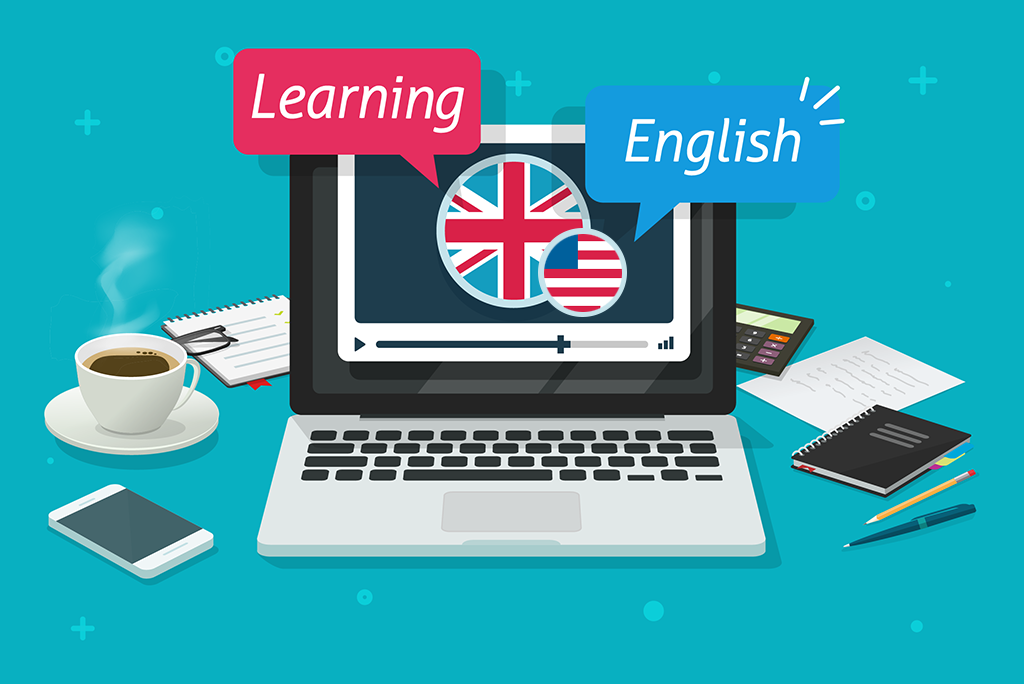
Today, engineers all over the world are increasingly working within global environments. With 67 countries declaring English as their official language, it has become the most common language spoken by engineering professionals and students. It is also the most commonly spoken language within international supply chains. Many college programs expect engineering students to be proficient in English. In many cases, it may be difficult for an engineering professional to excel in their career without fluency in English. Additionally, engineering companies that lack English-fluent workers may struggle to compete in a global business environment.
College Engineering Programs Often Require Students to Have Proficiency in English
Many top college engineering programs in the United States and the United Kingdom require students to have more than a basic understanding of English.
“Students taking engineering courses in the US need a high level of English proficiency covering a variety of aspects, including listening, speaking, reading, and writing,” Steve Arar, a PhD graduate in microelectronics, told All About Circuits (AAC).
In fact, a large number of universities require applicants to take standardized tests to prove English proficiency as part of their admissions process, because lectures and educational materials, including papers, textbooks, and webinars, are usually in English. Fluency is important for their understanding of the material and may also better prepare students who decide to pursue careers in English-speaking organizations.
English Proficiency is Usually Necessary for Engineers to Excel at Work
“Electrical engineering is an international field, and it depends upon an increasingly extensive collection of specialized terminology that exists primarily in English,” Robert Keim, All About Circuits’s Director of Engineering, told AAC. “Proficiency in English opens the door to a more diverse and satisfying collection of educational and professional opportunities.”
An engineering professional can be a master in their field, but if they struggle with English, they will likely find themselves lagging behind their peers, according to Michael Skapinker of the Financial Times. “You can be a top-class engineer and be held back by an inability to speak the global business language,” he wrote.
Technical professionals who struggle with the nuances of English may also struggle to communicate their ideas effectively through presentations and public speaking, which are usually necessary to climb the organizational ladder.
“On a more practical level, it is essential to develop the habit of speaking more slowly, pronouncing words carefully, and using simple, straightforward vocabulary and sentence structures,” Keim told AAC. “Many people do not realize how difficult it is for language learners to understand ‘normal’ speech produced by native speakers. Both speaker and listener must actively attempt to facilitate successful, comfortable communication.”
English-Fluent Workers Help Organizations Compete in the Global Market
Organizations that employee English-proficient workers tend to see big financial benefits. While proficiency in the language fluctuates across different-sized businesses, companies with $10–$60 billion USD worth of sales, on average, employ people with higher English proficiency scores than those making under $10 billion or over $60 billion.
According to Arar, when employees based in different countries can all speak a common tongue, they can more easily communicate and share knowledge, leaving them with more time to concentrate on their technical work.
Additionally, certain aspects of English vocabulary make technical concepts easier for international teams to communicate. “We might occasionally observe that a word in a particular language explains a technical concept better than the corresponding English terminology,” says Arar.
“However, in general, I believe that the English language includes a wealth of vocabulary and has powerful grammatical structures,” he added. “These two features can make technical communications clear and concise.”
Improve English Language Proficiency
Coming soon to IEEE Xplore and the IEEE Learning Network, IEEE English for Technical Professionals is an online learning program that uses real-life interactive scenarios to provide non-native English speakers with a working knowledge of English techniques and vocabulary that are essential for today’s technical workplace. Designed to help learners master essential English skills, this mobile-friendly program is ideal for both working professionals, as well as students who are preparing to enter the field.
Resources
Fadelli, Ingrid. (20 March 2020). Is English Still the Universal Language of Electrical Engineering? All About Circuits.
Smith, Emma. (16 January 2020). Degree programs for engineers looking to work in global development. Devex.
Skapinker, Michael. (11 November 2019). Non-English speakers are shut out of the top jobs. Financial Times.
Burma, Peter and Tran, Minh. (21 November 2016). Rating the English Proficiency of Countries and Industries Around the World. Harvard Business Review.
Since the end of World War II, English has become the established language of scholarly communication. It’s recognized as the international language of science and engineering. Academic reward structures in many countries place great emphasis on publication in international journals that are mostly English-language. As technology advances globally, engineers must be able to communicate across national and cultural boundaries, and English is the vehicle for professionals advancing technology today.
It makes sense, then, that improving your ability to speak, read and write in English can affect research, collaboration, instruction and ultimately, overall success.
That’s why IEEE partnered with Cambridge University Press to create an interactive program of engaging online English instruction for engineers, technical students and faculty.
IEEE English for Engineering consists of more than 45 hours of online training to enhance communication skills across four dynamic and interactive modules:
- Speaking in Technical English
- Listening and Comprehension
- Technical Writing
- Reading and Understanding Technical Publications
New students will take a placement exam to assess and guide level selection: Introductory, Intermediate, or Advanced. They’ll advance through lessons individually and receive feedback on their progress. Then, upon successful completion of each skill level, students will receive CEUs/PDHs for professional licenses.
6 Benefits of English for Engineers
- Learn to communicate effectively and share ideas with colleagues.
- Strengthen your written English communications skills, which can help authors and researchers effectively share their research results.
- Enable greater collaboration with global research teams.
- Learn to communicate effectively, lead classroom conversations and lectures, and assess assignments and projects.
- Build confidence and the necessary communication skills for job performance and career advancement.
- Develop more effective verbal communication skills and enhanced presentation capabilities.
How to Subscribe
Click here for more information and to subscribe to this valuable training course, or download our product sheet to share with the training manager at your organization.
Resources
(July 2008). English as the international language of science. Research Trends.