autonomous-vehicle-navigate-intersections

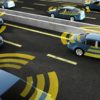
For the first time, autonomous vehicles (AVs) are now being tested on the streets of Austin, Texas and Miami, Florida, without drivers at the wheel. Designed by Argo AI, the vehicles are also being tested in Washington, D.C., Pittsburgh, Pennsylvania, Detroit, Michigan, and Palo Alto, California, as well as the German cities of Hamburg and Munich. 

These tests are only the beginning. The company, whose autonomy platform uses lidar, sensors, and mapping software, is partnering with both ride-sharing service Lyft and Walmart’s delivery service to provide driverless taxi rides and autonomous grocery delivery.

Despite many advancements in AV technology, the road ahead remains uncertain. To replace human drivers, these vehicles need to be able to intuitively navigate roads and make split decisions the same way humans do. Current systems are still far from reaching this level of autonomy. However, some recent research breakthroughs may help engineers understand how to overcome this challenge.

Overly Conservative Decision Making Can Make AVs Easy to Fool

To make autonomous vehicles safer, engineers have traditionally designed them to be overly cautious. However, recent research from the University of California suggests this is part of the problem.

Since AVs cannot tell the difference between an object that makes its way onto a roadway by accident and an object placed on a roadside intentionally to provoke a physical denial-of-service attack, they can easily be tricked into making a wrong decision. For example, coming to a sudden stop in the middle of the road could potentially cause an accident. 

Ironically, this problem is a result of engineers designing AV planning modules to operate with “an abundance of caution,” the study’s lead author, Ziwen Wan, a Ph.D. student in computer science at UC Irvine, explained to the UC newsroom.

“But our testing has found that the software can err on the side of being overly conservative,” Wan said, “and this can lead to a car becoming a traffic obstruction, or worse.”

New Machine Learning Technique Helps AVs Maintain Steady Flow at Intersections

Another obstacle for autonomous systems is knowing how to move together in busy intersections. A team of researchers from MIT recently discovered a machine learning technique that can help fleets of AVs navigate signalized intersections in a way that allows traffic to continue flowing uninterrupted, while at the same time making traveling faster and more fuel efficient. 

Rather than relying on typical mathematical models to navigate complex intersections, the researchers turned to deep reinforcement learning, a model-free method that uses trial-and-error, in which the control algorithm learns to make a sequence of decisions, and is rewarded when it makes the right one. They refined this training further by using another technique known as reward shaping, in which they give the system some domain knowledge it would not be able to learn by itself. Using this method, the vehicle would be penalized if it stopped when it wasn’t supposed to brake. This helps the vehicle understand how to balance competing speed requirements that allow it to both improve travel time and reduce emissions.

Using simulations, the researchers found that if every vehicle on the road is autonomous, their control system could reduce fuel consumption by 18 percent and carbon dioxide emissions by 25 percent, while increasing travel speeds by 20 percent. 

These research findings are just the start. With every advancement in AV technology, engineers are one step closer to creating a world in which traveling is easier, faster, and safer. 

Preparing for Roadways of the Future

Learn about the latest developments in AV technology with training in foundational and practical applications through the IEEE Guide to Autonomous Vehicle Technology. Created by leading experts in the field, this online seven-course training program explores the latest strategies and business-critical research on autonomous, connected, and intelligent vehicle technologies

Connect with an IEEE Content Specialist today to learn more about purchasing the program for your organization.

Interested in purchasing the program for yourself? Access it now through the IEEE Learning Network (ILN)!

Resources

Bradbury, Rosie. (31 May 2022). There are now fully driverless cars with no human behind the wheel for safety on the roads of Miami and Austin. Business Insider.

Bell, Brian. (26 May 2022). Autonomous vehicles can be tricked into dangerous driving behavior. University of California.

Zewe, Adam. (17 May 2022). On the road to cleaner, greener, and faster driving. MIT News.

Currently, 200 million digitally “connected vehicles” are traversing the world’s roadways, according to a recent white paper from the 5G Automotive Association (5GAA). By 2024, real-time traffic updates will be possible thanks to road infrastructure that will be digitally connected. By 2026, advanced vehicle-to-vehicle (V2V) capabilities will help bring automated vehicles another step closer to reality.

Today’s vehicles contain more software than ever before, as well as a constellation of automotive systems in their power locks, brakes, windows, entertainment, steering, and other features. Future vehicles will come equipped with advanced autonomous capabilities and driver-assistance systems (ASAD) that will make them even more complex. 

These developments are happening rapidly. According to the research firm Frost & Sullivan, over 18 million new autonomous vehicles will be road-ready by the end of the decade. However, without appropriate regulations and advanced security features, these vehicles can become easy prey for hackers. With this in mind, many governments and automakers have already begun to take cyber security seriously. 

Standards and Regulations

The United Nations Economic Commission for Europe (UNECE) is in the process of developing automotive cybersecurity regulations. Known as WP.29, the regulation would enhance cyber security and software updates in vehicles. It will be mandatory for all vehicle manufacturers in the European Union beginning July 2024. While manufacturers in Korea and Japan have agreed to comply with WP.29 within their own timelines, manufacturers in North America won’t be required to adhere to them.

Additionally, the International Organization for Standardization (ISO) is working on ISO/SAE 21434, a standard that aims to establish “cyber security by design” from the initial phase of a vehicle’s design. The organization is also working to establish ISO 24089, a standard that would regulate software updates in vehicles.

Five Top Cyber Security Threats for Automakers

In order to ensure their designs are safe from cyber security threats, vehicle manufacturers have five main concerns they will need to consider, according to Security Intelligence. These include:

  1. Complexity: Future vehicles will come equipped with interconnected architectures containing embedded telecommunications that will make them challenging to secure.
  2. Attacks on the power grid: Recently, research has demonstrated that it would be possible for hackers to disrupt the power grid or trigger a blackout by attacking multiple electric vehicles that are charging at the same time. To prevent this, standards will need to be developed that require vehicles to undergo testing and come equipped with cyber security features.
  3. Mobile devices: Increasingly, mobile phones are being used to control the various functions and features of connected vehicles such as windshield wipers, locks, and heat/air-conditioning. These devices pose a range of security threats, such as when a user inadvertently downloads malware, fails to update their operating system, or has a faulty password. If a hacker manages to take control of their phone, it wouldn’t be difficult for them to take control of the vehicle.
  4. Untrained employees: In order to ensure cybersecurity is secure across all facets of a vehicle’s design, every employee engaged in the design process must be adequately trained in cyber security.
  5. Securing financial features: Since many hackers will likely be motivated to steal financial information from drivers, special attention must be given to financial security features such as payment for fuel, tolls, and subscriptions.

Change is often difficult, but vehicle manufacturers will need to adjust to international regulations and standards in order to gain the public’s trust. By getting a head start in the process now, they can ensure their vehicles are safe when they’re ready to hit the roads.

Protecting Vehicles

As the automotive industry continues to work on intelligent and autonomous vehicles, there is a need to better comprehend the safety and security of this connected technology. Automotive Cyber Security: Protecting the Vehicular Network is a five course program that aims to foster the discussion on automotive cyber security solutions and requirements for not only intelligent vehicles, but also the infrastructure of intelligent transportation systems.

Contact an IEEE Content Specialist today to learn more about getting access to these courses for your organization. 

Interested in the course for yourself? Visit the IEEE Learning Network.

Resources

Dhami, Indy. (2 October 2020). Top 5 Threat Vectors in Connected Cars and How to Combat Them. Security Intelligence. 

Grau, Alan. (28 September 2020). Cybersecurity is Imperative for Connected Cars. Electronic Design.

Kohler, Arndt. (24 September 2020). Automotive Cybersecurity: New Regulations in the Auto Industry. Security Intelligence. 

O’Halloran, Joe. (10 September 2020). Connected vehicle association makes call for wireless spectrum to develop use cases. ComputerWeekly.com.

autonomous-vehicle-cyber-security-theats

While autonomous vehicles are expected to be far less prone to accidents than driver-controlled vehicles once they’ve undergone substantial training, they may pose a more serious threat. Due to the over-the-air hardware and software updates these vehicles routinely require, experts believe they have the potential to easily come under attack from hackers who can use them to wreak havoc on the road, potentially turning them into weapons.

“Hackers, for instance, could remotely interfere with a connected vehicle and disrupt safety-critical systems and functions including the engine, brakes, and steering wheel, causing the driver to lose control. On a larger scale, a hacker could enter a single vehicle and access an entire fleet, as a fleet is only secure as its least-secure vehicle,” Moshe Shlisel, CEO at GuardKnox, told Help Net Security.

This cyber security threat means autonomous vehicles will need to undergo intense security vetting. 

Three Risk Levels to Consider

To better secure autonomous vehicles, three risk levels should be taken into account:

1) Critical hardware and software components that receive over-the-air updates must have supply chains that are adequately understood and protected.
2) The vehicle’s operating system must use an interface that is secure and equipped to repel cyber security threats.
3) Vehicle operating centers need to be secure.

Currently, there are no specific regulations mandating these considerations for autonomous vehicle cyber security. The SELF DRIVE Act, U.S. legislation surrounding the safety and innovation in testing and deployment of autonomous vehicles, requires a cyber security plan only for highly automated vehicles. Additionally, the U.S. Department of Transportation has not provided specific security regulations for advanced driver-assistance systems.

In Europe, the United Nations Economic Commission has been working on cyber security regulations for autonomous vehicles in the 54 countries it oversees. Under UNECE, regulations will mandate a Certificate of Compliance for Cyber Security Management Systems.

According to Shlisel, regulations are vital to ensuring autonomous vehicles are protected from cyber security threats, especially as these vehicles grow more connected and autonomous.

“Federal lawmakers should enact legislation–with the input of cyber security experts–setting uniform safety standards across the board for these vehicles. We see the beginnings of this in the U.S., as several bills–such as the SPY Car Act and AV START Act–have been drafted surrounding connected and autonomous vehicles, but no bill has yet succeeded,” he said. 

Potential Security Risks of AV Crowdsourcing

Crowdsourcing platforms like the Japanese-based group Autoware can help speed innovation in the autonomous vehicle industry. However, information sharing within crowdsource environments, which have multiple contributors, pose potential cyber security threats. While crowdsourcing may speed solutions, it’s important to ask these questions: 

  • How will unknown contributors be validated?
  • In what ways should the contributor be trusted, especially when it comes to their competence?
  • Is the contributor actually acting as an enemy?
  • Is it smart to unveil the code to anyone who can see it, particularly those who may have bad intentions?
  • Validation will be expensive — who will pay for it?

One potential solution is to rely on smaller consortia instead of larger crowdsourcing platforms, writes Rahul Razdan for Forbes.

“It would seem that for safety critical systems smaller trusted consortia which make the active engineering trade-off between innovation velocity and validation costs makes a great deal of sense,” Razdan wrote, citing the Automotive Grade Linux as an example. “In addition, in this structure, contribution equity and consortium stability issues can be much more easily managed. When this process can reach ‘escape’ velocity in terms of the producers/consumers,  there is a potential path to a more open system.”

Understand Autonomous Vehicle Technology

Prepare your organization for the latest developments in autonomous vehicle technology. Offer training in foundational and practical applications of autonomous, connected, and intelligent vehicle technologies. Developed by leading experts in the field—including Steve Vozar, CTO and co-founder of May Mobility—the IEEE Guide to Autonomous Vehicle Technology is a seven-course online training program.

Connect with an IEEE Content Specialist today to learn more about purchasing the program for your organization.

Interested in purchasing the program just for yourself? Access it through the IEEE Learning Network.

Resources

Razdan, Rahul. (9 May 2020). Open Source And Automotive Safety Critical Systems: What Are The Tradeoffs? Forbes.

Razdan, Rahul. (2 May 2020). Tesla Decepticons ? Is Automotive CyberSecurity A National Defense Issue? Forbes.

Zora, Mirko. (15 April 2020). Are we doing enough to protect connected cars? Help Net Security.

A future with widespread autonomous vehicle (AV) technology could include less traffic, safer roads, and interconnected vehicles that allow drivers to sit back and enjoy the ride. Expected to reach $556.67 billion USD by 2026, the market place for AV technology is growing quickly. However, the industry still has a long way to go. In order for autonomous vehicle technology to properly function, it must work in conjunction with other areas. The five most relevant are listed below.

Five Use Cases

5G

An autonomous vehicle is expected to generate 2 Petabytes (2 million GB) of data every year. It would take the best Wi-Fi available months to be able to transfer that amount of information. The nearly real-time speeds of 5G are 10 times faster than 4G. With its infrastructure and dense network, 5G makes the future of autonomous vehicles possible.

Latency

Decreased latency, another characteristic of 5G, can also benefit autonomous vehicles. 4G currently has a latency of 50 milliseconds, which can be seen as a large delay when it comes to passenger safety.

Smart Cities and the Internet of Things (IoT)

In order for an autonomous vehicle to make smart decisions, it requires information about its environment. Smart cities, which are IoT-ready, allow for that. A city that can report on traffic, signals, etc., can help a self-driving car move smarter and more easily navigate its way around town.

Data Management

Analyzing the amount of data a self-driving car produces takes time. With the potential of nearly 10 million cars hitting the road, edge computing can help streamline this analysis by examining it closer to the source.

V2X

Vehicle-to-everything (V2X) allows the information from autonomous vehicle sensors and other sources to travel through high-bandwidth, high-reliability, and low-latency channels. It creates an ecosystem that enables cars to communicate both with each other and with infrastructures including parking lots and traffic lights.

Not only can this improve vehicle safety, but it also gives drivers or passengers information about road conditions ahead, so that they can appropriately respond. When combined with Artificial Intelligence (AI), a self-driving car will be able to make that decision itself.

Roadblocks

A study from NAMIC found that 42% of surveyed consumers said that no matter how long the technology was available, they would refuse to ride in fully automated vehicles. Similarly, 46% of respondents were skeptical about using fully automated vehicles for ride-sharing services. In order to gain public trust, the right infrastructure needs to be in place.

Data management challenges, safety concerns, and high manufacturing costs are roadblocks that can prevent widespread autonomous vehicle adoption. However, as large manufacturers and automotive organizations continue to enhance and improve the technology, the potential for an autonomous future continues to grow.

Train Your Team in Autonomous Vehicle Technology

Prepare your organization for the latest developments in AV technology with training in foundational and practical applications of autonomous, connected, and intelligent vehicle technologies. Developed by leading experts in the field, the IEEE Guide to Autonomous Vehicle Technology is a seven-course training program offered online.

Connect with an IEEE Content Specialist today to learn more about purchasing the program for your organization.

Interested in purchasing the program just for yourself? View it on the Learning Network, a new learning management platform!


Resources

(18 October 2019). Who Will Use Self-Driving Cars?. PYMNTS.

Zoria, Sophie. (1 November 2019). 5 Striking Uses For Autonomous Driving Technology. Customer Think.

Depending on how many of the 30 billion Internet of Things (IoT) devices forecast for global deployment by 2020 rely on the cloud, managing the deluge of IoT-generated data makes proper processing seem near impossible. Traditional cloud computing has serious disadvantages, including data security threats, performance issues, and growing operational costs. Because most data saved in the cloud has little significance and is rarely used, it becomes a waste of resources and storage space.

In many instances, it would be incredibly beneficial to handle data on the device where it’s generated. That’s where edge computing comes in. Edge computing helps decentralize data processing and lower dependence on the cloud.

Edge computing has several advantages, such as:

  • Increasing data security and privacy
  • Better, more responsive and robust application performance
  • Reducing operational costs
  • Improving business efficiency and reliability
  • Unlimited scalability
  • Conserving network and computing resources
  • Reducing latency


Edge Computing Use Cases

Prime use cases, which take full advantage of edge technology, include:

Autonomous Vehicles: The decision to stop for a pedestrian crossing in front of an autonomous vehicle (AV) must be made immediately. Relying on a remote server to handle this decision is not reasonable. Additionally, vehicles that utilize edge technology can interact more efficiently because they can communicate with each other first as opposed to sending data on accidents, weather conditions, traffic, or detours to a remote server first. Edge computing can help.

Healthcare Devices: Health monitors and other wearable healthcare devices can keep an eye on chronic conditions for patients. It can save lives by instantly alerting caregivers when help is required. Additionally, robots assisting in surgery must be able to quickly analyze data in order to assist safely, quickly, and accurately. If these devices rely on transmitting data to the cloud before making decisions, the results could be fatal.

Security Solutions: Because it’s necessary to respond to threats within seconds, security surveillance systems can also benefit from edge computing technology. Security systems can identify potential threats and alert users to unusual activity in real-time.

Retail Advertising: Targeted ads and information for retail organizations are based on key parameters, such as demographic information, set on field devices. In this use case, edge computing can help protect user privacy. It can encrypt the data and keep the source rather than sending unprotected information to the cloud.

Smart Speakers: Smart speakers can gain the ability to interpret voice instructions locally in order to run basic commands. Turning lights on or off, or adjusting thermostat settings, even if internet connectivity fails would be possible.

Video Conferencing: Poor video quality, voice delays, frozen screens— a slow link to the cloud can cause many video conferencing frustrations. By placing the server-side of video conferencing software closer to participants, quality problems can be reduced.

Further Enhanced Security

Although edge computing is a sensible alternative to cloud computing in many instances, there’s always room for improvement. According to “Reconfigurable Security: Edge Computing-Based Framework for IoT”, a paper published by IEEE Network, existing IoT security protocols need improvement.

A possible solution to better secure IoT-generated data is an IoT management element called the Security Agent. This new piece would use routers and other near-edge boxes to manage the computing the IoT device could not take on. In addition to being more secure, it’ll simplify the management of keys. The Security Agent box has the capability of running copious sensors that are difficult to access. The researchers’ state that if the needed authentification is not completed quickly, IoT applications will fail.

Getting Up to Speed

Designed for organizations investing heavily in this critical technology, IEEE Introduction to Edge Computing is a five-course program designed to train your entire team to support edge computing. The online, on-demand courses included in this program are:

  • Overview of Edge Computing
  • Practical Applications of Edge Computing
  • Research Challenges in Edge Computing
  • Designing Security Solutions for Edge, Cloud, and IoT
  • Tools and Software for Edge Computing Applications

To learn more about getting access to these courses for your organization, connect with an IEEE Content Specialist today.


Resources

Aleksandrova, Mary. (1 Feb 2019). The Impact of Edge Computing on IoT: The Main Benefits and Real-Life Use Cases. Eastern Peak.

Nelson, Patrick. (10 Jan 2019). How edge computing can help secure the IoT. Network World.

Caulfield, Matt. (23 Oct 2018). Edge Computing: 9 Killer Use Cases for Now & the Future. Medium.

Talluri, Raj. (24 Oct 2017). Why edge computing is critical for the IoT. Network World.


One of the biggest frontiers in electrical engineering today is the development and implementation of smart grid technology. Fueled by the global demand for greener technologies and alternative fuels, environmentally-friendly smart grid technology has the ability to stimulate stagnated economies and change the way power is delivered to electricity consumers around the world.

Smart grid technology combines existing electrical infrastructure with digital technologies and advanced application to provide much more efficient, reliable and cost-effective energy distribution. It’s a merger of power systems, information technology, telecommunications, switchgear and local power generation, along with other fields. As these separate technologies become merged, new safety considerations must be taken into account.

Ever since the days of Thomas Edison, people have been concerned with the safety of electrical devices. As innovative technologies and new opportunities and safety issues arise, the National Electrical Safety Code® (NESC®) evolves to address any and all concerns.

As Technology Advances, So Does the NESC

As plug-in hybrid electric vehicles (PHEVs) and full electric vehicles (EVs) replace gasoline-only burning vehicles, public parking lots will need to be equipped with outdoor charging stations, including pay-for-use charging stations. These stations will integrate technologies such as electrical metering, switching, information technology, telecommunications and currency handling technology.

Safety comes into play in making the charging station terminals safe for unskilled drivers to use, guarding against intentional access to hazardous voltages, as well as in protecting communication circuits. This may mean putting telecommunication protectors at each end of a campus-run communication conductor where an exposure to lightning or to accidental contact with electric power conductors exists.

Vehicle charging stations are just one example of how advances in technology lead to NESC updates.

Stay on Top of the NESC

smart grid safety national electrical safety code 2017 ieee standards

The safety of utility-owned smart grid equipment within power generation or transmission circuits, up to and including the service conductors to customer buildings, will to continue to be evaluated for safety in accordance with basic utility safety standards or codes, including NESC.

To help your company prepare to comply with the latest safety guidelines, IEEE offers a complete seven-course NESC program online through IEEE Xplore :

Order the complete program today and stay on top of the critical tech issues affecting the industry.

Resources

Gies, Don. (1 Mar 2014). Safety Considerations for Smart Grid Technology Equipment. In Compliance.