The new wireless networking standard 802.11ax (Wi-Fi 6) delivers enhanced wireless technology in dense environments where it can more effectively overcome interference from cells on the same channel. An even newer version of Wi-Fi 6, dubbed “Wi-Fi 6 Extended” (Wi-Fi 6E), could deliver even better service.

As Jerry Jackson in PC Mag reports, Wi-Fi 6E provides faster speeds and lower latencies than Wi-Fi 6 and earlier versions. At the time of announcement, the IEEE 802.11ax (Wi-Fi 6) standard “was limited by law to a wireless spectrum that only covered the 2.4GHz and 5GHz bands”. These 2.4GHz bands have just three non-overlapping channels— meaning you, your household, and your neighbors, all share bandwidth.

Since multiple devices are competing for bandwidth, signals are often lost. However, after the Federal Communications Commission unanimously voted to make the 6GHz band available for unlicensed use in April 2020, significantly more airwaves opened, which routers can use to broadcast Wi-Fi signals.

Hence, Wi-Fi 6E expands on Wi-Fi 6 to cover 6GHz frequency.

“The opening of the 6GHz band is the biggest spectrum addition to Wi-Fi since 1989,” writes Jackson. “The jump from 5GHz to 6GHz might not sound like much, but it essentially quadruples the amount of airwaves (14 additional 80MHz channels, and seven additional 160MHz channels) available for routers and smart devices. That means less signal interference.”

What Are the Technical Benefits of Wi-Fi 6?

Wi-Fi 6 is expected to bring a number of technical benefits that will “enable use cases beyond what is possible today,” states Tim Pohlmann, CEO of IP Analytics, an IP intelligence tool. According to Pohlmann, these benefits will include: 

  • Connected venues and cities: Wi-Fi 6 BSS Colouring technology will guarantee resistance to interference— even in public places with a high density of devices such as event venues and universities. With its larger bandwidth, Wi-Fi 6 can deliver consistent real-time data exchange while allowing thousands of people to connect.
  • Connected cars: Wi-Fi 6 enables larger bandwidth that will let vehicles exchange real-time information. Furthermore, Wi-Fi 6’s target wake time (TWT) feature allows for lower battery consumption. This means Wi-Fi sensors in traffic lights or buildings will only “wake up” when needed.
  • Connected factories: Wi-Fi 6 technologies OFDMA and MU-MIMO will support “more IoT devices to operate unimpeded on the network, and thus means that millions of machine components can be connected and real-time data points operated at low-power consumption.”
  • Connected homes: Wi-Fi 6 enables 2.4 GHz and 5 GHz to operate at the same time, delivering high bandwidth and low latency for high-definition video systems, augmented reality/virtual reality (AR/VR) devices, high-quality streaming platforms used for, conference video calls and gaming.

“Wi-Fi 6 will likely become the dominant access choice for indoor networks on account of improvements in speed, latency and higher density of connected devices,” states Pohlmann. “It is also the ideal system in spaces where access points will serve more users.”

However, he notes that Wi-Fi 6 must exist alongside 5G to support “use cases at home, while driving, at the office, outside or when working remotely.” While many argue that Wi-Fi 6 and 5G will be competitors, Pohlmann believes that they will work in tandem and complement each other in many applications. Furthermore, it is unlikely that a sole technology would support all connectivity.

Wi-Fi 6 and Wi-Fi 6 Extended are still developing. However, the ability to overcome service issues in high-density environments will undoubtedly spur advancement. 

Improving Quality of Experience with IEEE Std 802.11ax™

The work on High Efficiency Wireless Local Area Networks (WLANs) in IEEE Std 802.11ax™ started in 2013 as a new amendment to the IEEE 802.11 WLAN standard. A goal of the new amendment is to address dense deployments characterized by a large number of access points and stations placed in close proximity in a limited geographical area. Such usage scenarios impact the quality of experience (QoE) for latency-sensitive applications such as voice-over-Wi-Fi™ and video conferencing.

Learn More About Wi-Fi 6

Enroll in our upcoming live two-course program, IEEE 802.11ax: An Overview of High Efficiency Wi-Fi (Wi-Fi 6), which will provide an overview of the features and optimizations introduced by IEEE 802.11ax to the physical (PHY) and medium access control (MAC) layers, which lead to the improvements in Wi-Fi. Purchase this course program by 17 February for the opportunity to ask questions and interact with the instructors. Part One will take place on 21 Feb from 12-3pm ET, and Part Two will take place at the same time on the following day.

Plus, check out this on-demand virtual event from IEEE Educational Activities and IEEE Standards Association that describes new IEEE 802.11ax features such as Orthogonal Frequency Division Multiple Access and Uplink multi-user transmissions together with Physical (PHY) and Medium Access Control (MAC) enhancements specific to IEEE 802.11ax to improve QoE.  Watch now!

Resources

Jackson, Jerry. (7 October 2021). What Is Wi-Fi 6E? PC Mag. 

Pohlmann, Tim. (2021). Who’s ahead in the WiFi 6 patent race. I am. 

Edge computing is a decentralized alternative to cloud computing that uses a number of smart devices around the “edge” of a network to store data. With the rise of 5G and the Internet of Things (IoT), edge computing is expected to provide numerous benefits to organizations. Such benefits include shorter latencies, improved security, more affordable costs, and responsive data collection. According to a recent report from the research and consulting firm Frost & Sullivan, 90% of industrial enterprises will be using edge computing by 2022.

“To remain competitive in the post-cloud era, innovative companies are adopting edge computing due to its endless breakthrough capabilities that are not available at the core,” David Williams, managing principal at AHEAD, told the Enterprisers Project.“Such benefits include unparalleled local interactivity, reduced impact from service interruptions, improved privacy and security, and reduced latency.”

The Benefits of Edge Computing

Of all the benefits that edge computing can provide to organizations, lightning fast speed and reduced latency will be the most transformative. Moving large amounts of data across a network is time consuming. Edge computing brings computation closer to the user, making data transfer speeds much faster and less cumbersome.

“With edge computing, data is scrutinized and analysed at the site of production, with only relevant data being sent to the cloud for storage. This means much less data is being sent to the cloud, reducing bandwidth use, privacy and security breaches are more likely at the site of the device making ‘hacking’ a device much harder, and the speed of interaction with data increases dramatically,” writes Mark Seddon, CEO of Pact Global, in Information Age.

How will Edge Computing Transform Industries?

Edge computing is expected to pave the way for a number of technological revolutions, such as virtual and augmented reality for smartphone users, and smart cities with interconnected roadways and autonomous vehicles. Edge computing can also transform the industrial sector. Use cases include preventing equipment malfunction and reducing energy expenditure. Another potential application is “smart farming,” in which large sectors of agricultural production can be automated. This in turn could support farmers in boosting crop yields and reducing waste.

The film and gaming industries may be the first to be transformed by edge computing. Film producers must be able to transfer huge video files shot in high resolution. This process is often impossible to do over the internet. In fact, video files are so massive that most are still delivered by vehicle after shoots, rather than digitally. Slow speeds also make computer animation and rendering for film and games difficult.

To help solve this, Amazon Web Services is developing edge computing infrastructure in Los Angeles—a city home to numerous film and gaming companies. There, the tech giant has established the first of what it calls “AWS Local Zones,” an edge computing initiative that delivers low-latency access to Amazon Web Services, the company’s cloud computing platform, in “colocation centers,” rather than solely in Amazon’s vast cloud. These “local zones” provide distributed infrastructure that delivers edge computing and low-latency applications to clients. In each AWS Local Zone is an “AWS Outpost,” a rack that contains AWS cloud infrastructure. So far, Amazon has set up two Local Zones in Los Angeles, and aims to ease operations for the film and gaming industries.

Get Close to the Edge

Many organizations don’t fully understand edge computing and the impact it can have on their business. From providing real-time data analysis to reducing system malfunctions, edge computing can be customized to meet an organization’s specific needs.

Prepare your organization for edge computing integration. Designed to train your entire team to support edge computing, IEEE Introduction to Edge Computing is an online five-course program. To learn more about getting access to these courses for your organization, connect with an IEEE Content Specialist today.

Contact an IEEE Content Specialist to learn more about how this program can benefit your organization.

Interested in getting access for yourself? Visit the IEEE Learning Network (ILN) today!

Resources

Hughes, Matthew. (10 September 2020). What Is Edge Computing, and Why Does It Matter? How To Geek.

Miller, Rich. (4 September 2020). How AWS Cloud Customers Are Using Local Zones for Edge Computing. Data Center Frontier.

Seddon, Mark.(26 August 2020). How the edge and the cloud tackle latency, security and bandwidth issues. Information Age.

By utilizing multi-cloud systems, organizations are able to run their systems and store data across various cloud providers. According to the IBM Institute for Business Value, 85% of companies are currently using a multi-cloud system to manage their information. While the multi-cloud has its advantages, it also creates specific challenges that organizations need to take into consideration. Learn what you can do to work around the three most common challenges.

Network

Moving data around in the same cloud infrastructure is faster than having that information go across the internet. This means that network bandwidth and latency rates need to be taken into consideration when working with multi-cloud architectures.

If you are using a multi-cloud approach, this bottleneck is unavoidable. Network connectivity is the only way for the various clouds to communicate with one another. Fortunately, your IT team can use the approaches below to keep connectivity issues to a minimum.

  • Avoid having large amounts of data stored in one cloud and processed in another. While one cloud storage service might cost less, it is not worth the potential performance issues.
  • Compress data before sending it to another cloud.
  • If you have workloads that are mirrored across two or more clouds to improve reliability, make sure that each cloud’s instance of the workload can operate independently when not synced. This minimizes data transfer delays that can affect performance.

Monitoring

Recognizing performance and availability problems is difficult when monitoring multiple clouds. Finding a reliable cloud monitoring tool can help you avoid this issue. Most APM solutions are able to support the majority of clouds. This gives organizations multiple options for finding the right monitoring tool.

Nevertheless, efficient performance monitoring for multi-clouds includes ensuring that the tool understands how the cloud’s workload functions. In order to alert you of incoming problems, the monitoring tool needs to recognize that the two workloads are running in different clouds although they are connected and dependent upon each other.

Scaling

One advantage of cloud computing is the ability to scale resources for workloads quickly depending on demand. However, when it is done across multiple clouds, this can be difficult.

While you cannot use Azure’s auto-scaling to scale up AWS components, you can configure autoscaling for each individual cloud. This approach should not require too much effort from your IT team. However, should this approach not work, teams can rely on a universal control plane to manage their multi-clouds. A universal control plane automates the scaling and load-balancing across multiple clouds, eliminating the need to configure each cloud.

Finding the Best Cloud Solution

Learn more about the benefits and challenges of cloud computing and how it pertains to your organization. Check out the Cloud Computing Course Program, which offers 37 self-paced courses focused on various aspects of cloud computing technologies.

Contact an IEEE Content Specialist for more details about getting access to this program for your organization.

Interested in getting the program for yourself? Visit the IEEE Learning Network today.


Resources

Tozzi, Christopher. (25 November 2019). Multicloud Architecture: 3 Common Performance Challenges and Solutions. ITPro Today.

Jen, Miller. (8 November 2019). Multicloud vs. hybrid cloud: What it all means. CIO Dive.

A future with widespread autonomous vehicle (AV) technology could include less traffic, safer roads, and interconnected vehicles that allow drivers to sit back and enjoy the ride. Expected to reach $556.67 billion USD by 2026, the market place for AV technology is growing quickly. However, the industry still has a long way to go. In order for autonomous vehicle technology to properly function, it must work in conjunction with other areas. The five most relevant are listed below.

Five Use Cases

5G

An autonomous vehicle is expected to generate 2 Petabytes (2 million GB) of data every year. It would take the best Wi-Fi available months to be able to transfer that amount of information. The nearly real-time speeds of 5G are 10 times faster than 4G. With its infrastructure and dense network, 5G makes the future of autonomous vehicles possible.

Latency

Decreased latency, another characteristic of 5G, can also benefit autonomous vehicles. 4G currently has a latency of 50 milliseconds, which can be seen as a large delay when it comes to passenger safety.

Smart Cities and the Internet of Things (IoT)

In order for an autonomous vehicle to make smart decisions, it requires information about its environment. Smart cities, which are IoT-ready, allow for that. A city that can report on traffic, signals, etc., can help a self-driving car move smarter and more easily navigate its way around town.

Data Management

Analyzing the amount of data a self-driving car produces takes time. With the potential of nearly 10 million cars hitting the road, edge computing can help streamline this analysis by examining it closer to the source.

V2X

Vehicle-to-everything (V2X) allows the information from autonomous vehicle sensors and other sources to travel through high-bandwidth, high-reliability, and low-latency channels. It creates an ecosystem that enables cars to communicate both with each other and with infrastructures including parking lots and traffic lights.

Not only can this improve vehicle safety, but it also gives drivers or passengers information about road conditions ahead, so that they can appropriately respond. When combined with Artificial Intelligence (AI), a self-driving car will be able to make that decision itself.

Roadblocks

A study from NAMIC found that 42% of surveyed consumers said that no matter how long the technology was available, they would refuse to ride in fully automated vehicles. Similarly, 46% of respondents were skeptical about using fully automated vehicles for ride-sharing services. In order to gain public trust, the right infrastructure needs to be in place.

Data management challenges, safety concerns, and high manufacturing costs are roadblocks that can prevent widespread autonomous vehicle adoption. However, as large manufacturers and automotive organizations continue to enhance and improve the technology, the potential for an autonomous future continues to grow.

Train Your Team in Autonomous Vehicle Technology

Prepare your organization for the latest developments in AV technology with training in foundational and practical applications of autonomous, connected, and intelligent vehicle technologies. Developed by leading experts in the field, the IEEE Guide to Autonomous Vehicle Technology is a seven-course training program offered online.

Connect with an IEEE Content Specialist today to learn more about purchasing the program for your organization.

Interested in purchasing the program just for yourself? View it on the Learning Network, a new learning management platform!


Resources

(18 October 2019). Who Will Use Self-Driving Cars?. PYMNTS.

Zoria, Sophie. (1 November 2019). 5 Striking Uses For Autonomous Driving Technology. Customer Think.

While it may be too early to know exactly how 5G will benefit edge computing, the technology will have some sort of impact on consumers and businesses. The growth of edge computing and 5G are mutually dependent. In order for 5G to provide accelerated network speeds, it requires on low-latency and high interconnection that can be delivered through edge computing.

The evolution of 5G networks will affect more than smartphone speeds. While the ability to stream and download files on your mobile device faster will be convenient, it is only a fraction of the potential 5G has in advancing technology. By providing the ability to process large quantities of small data points in a short period of time, 5G is likely to significantly impact sectors such as transport, autonomous vehicles, smart cities, and the Internet of Things (IoT). In these fields, applications that currently use large sets of data and information are likely to benefit from the ability to send the desired information in almost real-time.

Benefits to Utilizing Edge Computing with 5G

By 2025, up to 20% of data might be processed in real-time. The combination of 5G and edge computing will bring consumers and organizations improved data processing, local caching and sharing of computing power, energy efficiency at both network and device level, resilience and security, and optimal work allocation.

  • Edge computing allows 5G networks to function at the needed reduced network latency for real-time operations. Together, they can enhance augmented and virtual reality for events, video and speech analytics, video security monitoring, and more.
  • 5G combines edge computing into wireless networks with open source initiatives and standards to distribute data across the network, from radio access and transport to new core-enabling capabilities such as network slicing.
  • Edge computing applies artificial intelligence (AI) and machine learning technologies to enhance data management across networks.

5G and Edge Security

Edge computing will play a critical role in changing the security of the network. The faster connections and increased interconnection that come with 5G also mean improved connections for cyber criminals.

John Maddison, an executive at Fortinet, Inc., mentions that “The security then needs to be deployed in a different way. And whether it’s deployed in the car itself, in the application, the IoT devices—it’ll be security deployed in the edge compute.”

Getting Ready for Edge Computing and 5G

Prepare your organization for the advancement of edge computing integration. Designed to train your entire team to support edge computing, IEEE Introduction to Edge Computing is an online five-course program. The on-demand courses included in this program are:

  • Overview of Edge Computing
  • Practical Applications of Edge Computing
  • Research Challenges in Edge Computing
  • Designing Security Solutions for Edge, Cloud, and IoT
  • Tools and Software for Edge Computing Applications

To learn more about getting access to these courses for your organization, connect with an IEEE Content Specialist today.

Interested in the course for yourself? Visit the IEEE Learning Network (ILN) to learn more.


Resources

(9 October 2019). 5G Americas: Edge Computing Not a One-Size-Fits-All for 5G. Global Newswire.

(15 October 2019). Edge, 5G And Data Centres: The Beginning Of The End Or The End Of The Beginning?. Data Economy.

Matthews, Kayla. (17 October 2019). How edge computing will benefit from 5G technology. Information Age.

Tripathi, Sunay. (23 October 2019). 5G And Enterprise Edge: Developments Toward A Device-Centric View Of The Cloud. Forbes.

Aten, Jason. (25 October 2019). Everyone Wants a 5G iPhone, but Here Are 5 Industries That Will Actually Be Revolutionized When Ultra-Fast Wireless Finally Arrives. Inc.

Depending on how many of the 30 billion Internet of Things (IoT) devices forecast for global deployment by 2020 rely on the cloud, managing the deluge of IoT-generated data makes proper processing seem near impossible. Traditional cloud computing has serious disadvantages, including data security threats, performance issues, and growing operational costs. Because most data saved in the cloud has little significance and is rarely used, it becomes a waste of resources and storage space.

In many instances, it would be incredibly beneficial to handle data on the device where it’s generated. That’s where edge computing comes in. Edge computing helps decentralize data processing and lower dependence on the cloud.

Edge computing has several advantages, such as:

  • Increasing data security and privacy
  • Better, more responsive and robust application performance
  • Reducing operational costs
  • Improving business efficiency and reliability
  • Unlimited scalability
  • Conserving network and computing resources
  • Reducing latency


Edge Computing Use Cases

Prime use cases, which take full advantage of edge technology, include:

Autonomous Vehicles: The decision to stop for a pedestrian crossing in front of an autonomous vehicle (AV) must be made immediately. Relying on a remote server to handle this decision is not reasonable. Additionally, vehicles that utilize edge technology can interact more efficiently because they can communicate with each other first as opposed to sending data on accidents, weather conditions, traffic, or detours to a remote server first. Edge computing can help.

Healthcare Devices: Health monitors and other wearable healthcare devices can keep an eye on chronic conditions for patients. It can save lives by instantly alerting caregivers when help is required. Additionally, robots assisting in surgery must be able to quickly analyze data in order to assist safely, quickly, and accurately. If these devices rely on transmitting data to the cloud before making decisions, the results could be fatal.

Security Solutions: Because it’s necessary to respond to threats within seconds, security surveillance systems can also benefit from edge computing technology. Security systems can identify potential threats and alert users to unusual activity in real-time.

Retail Advertising: Targeted ads and information for retail organizations are based on key parameters, such as demographic information, set on field devices. In this use case, edge computing can help protect user privacy. It can encrypt the data and keep the source rather than sending unprotected information to the cloud.

Smart Speakers: Smart speakers can gain the ability to interpret voice instructions locally in order to run basic commands. Turning lights on or off, or adjusting thermostat settings, even if internet connectivity fails would be possible.

Video Conferencing: Poor video quality, voice delays, frozen screens— a slow link to the cloud can cause many video conferencing frustrations. By placing the server-side of video conferencing software closer to participants, quality problems can be reduced.

Further Enhanced Security

Although edge computing is a sensible alternative to cloud computing in many instances, there’s always room for improvement. According to “Reconfigurable Security: Edge Computing-Based Framework for IoT”, a paper published by IEEE Network, existing IoT security protocols need improvement.

A possible solution to better secure IoT-generated data is an IoT management element called the Security Agent. This new piece would use routers and other near-edge boxes to manage the computing the IoT device could not take on. In addition to being more secure, it’ll simplify the management of keys. The Security Agent box has the capability of running copious sensors that are difficult to access. The researchers’ state that if the needed authentification is not completed quickly, IoT applications will fail.

Getting Up to Speed

Designed for organizations investing heavily in this critical technology, IEEE Introduction to Edge Computing is a five-course program designed to train your entire team to support edge computing. The online, on-demand courses included in this program are:

  • Overview of Edge Computing
  • Practical Applications of Edge Computing
  • Research Challenges in Edge Computing
  • Designing Security Solutions for Edge, Cloud, and IoT
  • Tools and Software for Edge Computing Applications

To learn more about getting access to these courses for your organization, connect with an IEEE Content Specialist today.


Resources

Aleksandrova, Mary. (1 Feb 2019). The Impact of Edge Computing on IoT: The Main Benefits and Real-Life Use Cases. Eastern Peak.

Nelson, Patrick. (10 Jan 2019). How edge computing can help secure the IoT. Network World.

Caulfield, Matt. (23 Oct 2018). Edge Computing: 9 Killer Use Cases for Now & the Future. Medium.

Talluri, Raj. (24 Oct 2017). Why edge computing is critical for the IoT. Network World.


With the constant growth of connected devices, as well as persistent phone and tablet use, traditional centralized networks may soon be overwhelmed with traffic. Gartner predicts that 25 billion connected devices will generate unprecedented amounts of raw data by 2021. This problem will demand next-level responsiveness and reliability— and it’s just two years away.

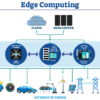
Edge computing promises to address the impending data surge with a distributed IT architecture that moves data center resources toward the network periphery.

Meeting Needs

Edge computing topology can reduce latency for time-sensitive applications, support IoT performance in low bandwidth environments, and ease overall network congestion.

  • Latency: By virtue of physical proximity, time-to-action drops when data analysis occurs locally rather than at a remote data center or cloud. Because data processing and storage will occur at or near edge devices, IoT and mobile endpoints can react to critical information in near real-time.
  • Congestion: Edge computing can also ease the growing pressure on the wide-area network. This can improve efficiency and keep bandwidth requirements in check This is a significant challenge in the age of mobile computing and IoT. Instead of overwhelming the network with a constant flood of relatively insignificant raw data, edge devices can analyze, filter, and compress data locally.
  • Bandwidth: Edge computing topology can support IoT devices in environments with unreliable network connectivity. Such environments include cruise ships, offshore oil platforms, rural agricultural plants, remote military outposts, and ecological research sites. Even with a hit-or-miss connection to the cloud, local compute and storage resources can enable continuous operation.

Edge Challenges

The more intelligent an edge device, the more intensive its configuration, deployment, and maintenance requirements. Organizations will need to decide on a case-by-case basis if distributed computing benefits (like cheaper WAN connectivity) justify the increased overhead at the network’s periphery. Gartner Research Director Santhosh Rao cautions that the costs associated with deploying and operating edge computing technology can pile up quickly. Although edge computing comes with many benefits, IT leaders will have to make sure a they outweigh its costs.

Security is also a major concern associated with edge computing. Some IT professionals worry that a decentralized computing architecture will make a network more vulnerable to attack by creating excess backdoor entry points. However, other people argue that placing an edge-computing gateway between network endpoints and the internet can actually improve security. Because more data will be processed and stored locally, travel to and from the cloud will be reduced.

Despite uncertainties, analysts expect organizations will increasingly rely on edge computing technology in the years to come. According to Rao, just 10% of enterprise data was created and processed outside of a centralized data center/cloud in 2018. He predicts that number will climb to 75% by 2025.

Introduction to Edge

Prepare your organization for the future by training your entire team to support edge technology now. IEEE Introduction to Edge Computing is a new five-course program designed for organizations investing heavily in edge. Courses include:

  • Overview of Edge Computing
  • Practical Applications of Edge Computing
  • Research Challenges in Edge Computing
  • Designing Security Solutions for Edge, Cloud, and IoT
  • Tools and Software for Edge Computing Applications

Connect with an IEEE Content Specialist for access today.


Resources

Irei, Alissa. (Apr 2019). Understand why edge computing technology matters. SearchNetworking.

Jones, Nick. (Sept 2018). Top Strategic IoT Trends and Technologies Through 2023. Gartner.